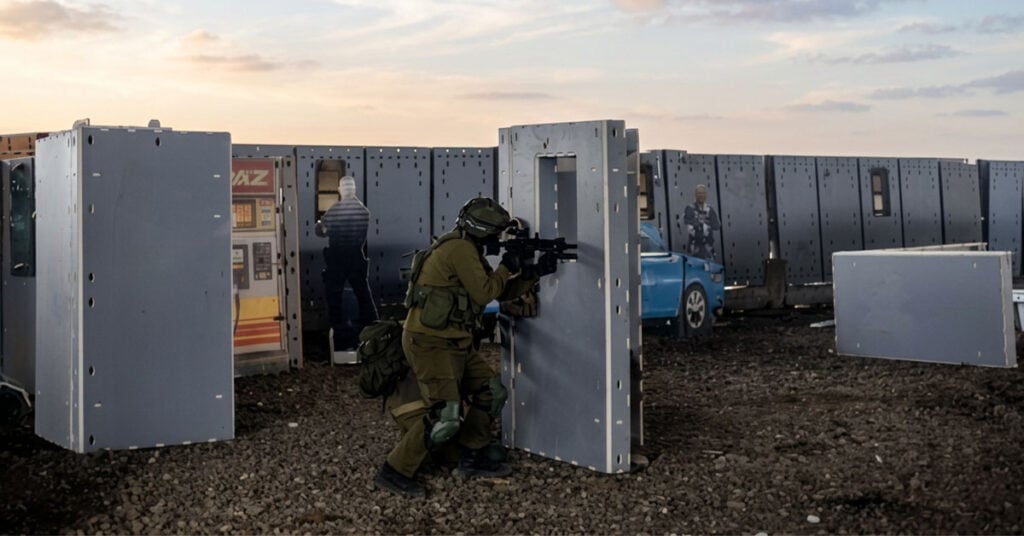
Close-Quarters Battle (CQB) presents unique challenges for target design. In CQB training (room clearing, hostage rescue, urban combat drills), engagements happen at short range and under stress. Targets for CQB must therefore prioritize safety, realism, and quick identification.
Safe at Point-Blank
In tight quarters, operators might fire at targets just a few feet away. Targets must not pose a ricochet or fragmentation hazard. This is why CQB targets are rarely steel. Instead, units use paper, cardboard, or specially made polymer and composite targets that sustain rounds without ricochet. The development of ricochet-free composite targets has been a boon for CQB. As noted, these can be safely engaged at any distance. Moreover, unlike paper targets, they sustain thousands of rounds while enabling more realistic close-range live drills.

Quick “Threat / No-Threat” Identification
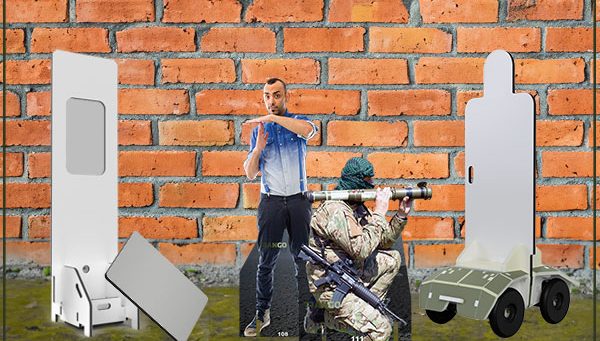
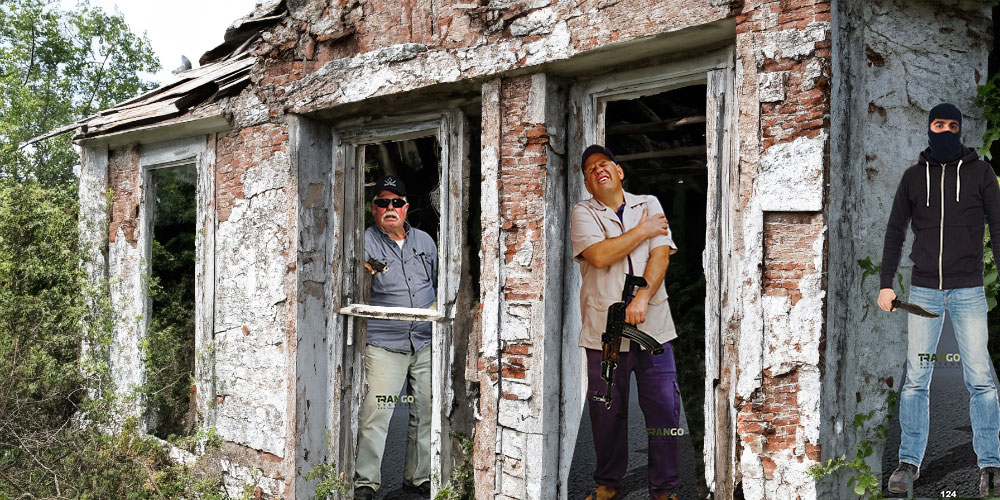
CQB scenarios often involve civilians, hostages, or fellow soldiers in the mix. Targets should reflect this complexity. Shoot/no-shoot targets are especially valuable here. For instance, targets that depict a hostile gunman versus a frightened civilian in the same environment. When a team enters a room, they may see multiple target figures. The design should force them to distinguish who is a threat immediately. The visuals must be clear enough (life-size human images or 3D dummies) for split-second reads. Utilizing friend & foe realistic targets in CQB trains operators to make the correct call under pressure, enhancing their situational awareness. Without such targets, CQB training can devolve into shooting every silhouette, which is not realistic or desirable.

Life-Sized and Properly Placed
In close quarters, target height and placement should mimic real humans. Targets might be positioned crouching (to simulate a threat taking cover) or elevated (a threat on a staircase or high ground). Some CQB target systems come with adjustable stands or articulating joints. Target design should allow partial exposure (perhaps only a head and one shoulder visible around a corner target, etc.). Trainers often slice a paper target and only show a portion to the shooter, emulating a foe using cover.
Durability for Multiple Runs
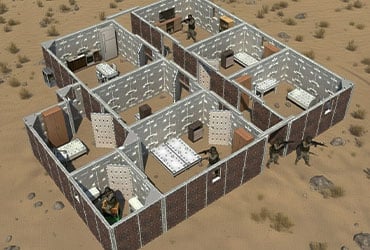
CQB training is often done repeatedly in the same shoot house or kill house. Teams will run a scenario, then reset and run again. Targets that survive multiple engagements streamline this process. With durable targets (like rubber or polymer/composite friend-and-foe silhouettes), you can run many iterations without any change. This is where durable targets greatly improve throughput; there’s no need to enter the shoot house to swap targets every time. Some shoot house target systems allow remote resetting (e.g. a target that falls when “shot” can be pulled back up with a cord or automated mechanism). The key is minimal downtime, so the focus stays on training. Sturdy target stands that don’t tip over when hit are also important. In summary, CQB target setups must be robust and quickly resettable to handle the high tempo of entry drills.
Integration with Props/Environment
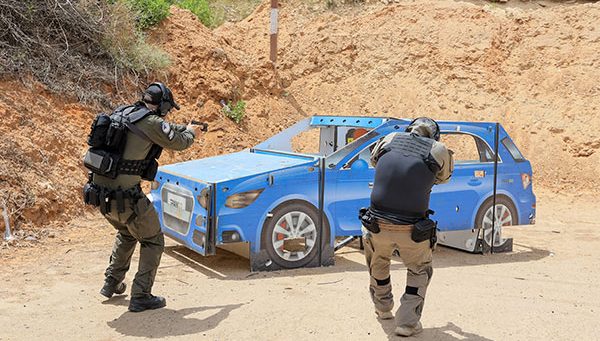
CQB often takes place in mock environments – like a fabricated room, a building facade, or even a simulated marketplace. Targets should be integrated into these environments for realism. That might mean a target is placed behind a window (to simulate a threat inside a building that responders must shoot through a window), or inside a vehicle (an adversary in the driver seat). Target design should facilitate this integration. Some specialized targets are made for CQB. The environment should dictate target placement. Hallways might have targets at the far end for long shot practice; corners might have a sudden close target to engage reflexively. A well-designed CQB target system gives trainers flexibility to place threats anywhere a human could be.

In essence, CQB target design focuses on replicating the complexity and tight margins of real close combat. They must be safe to shoot at muzzle distance, realistic enough to prompt correct decision-making, agile in placement, and durable through intense drills. When done right, the use of proper CQB targets significantly improves unit performance. Trainees become adept at quickly distinguishing threats and delivering accurate shots under pressure, which is exactly the outcome needed for real-life CQB engagements.