Vehicle targets should be part of police training because vehicles are part of real response environments.
They shape the scene. They affect movement. They create reference points. They change visibility. They add context that officers need to recognize and process.
In real incidents, officers often work around police vehicles, civilian cars, parked vehicles, motorcycles, pickups, and hostile-use vehicles. These elements are not background decoration. They influence how officers read the situation, communicate, move, and make decisions.
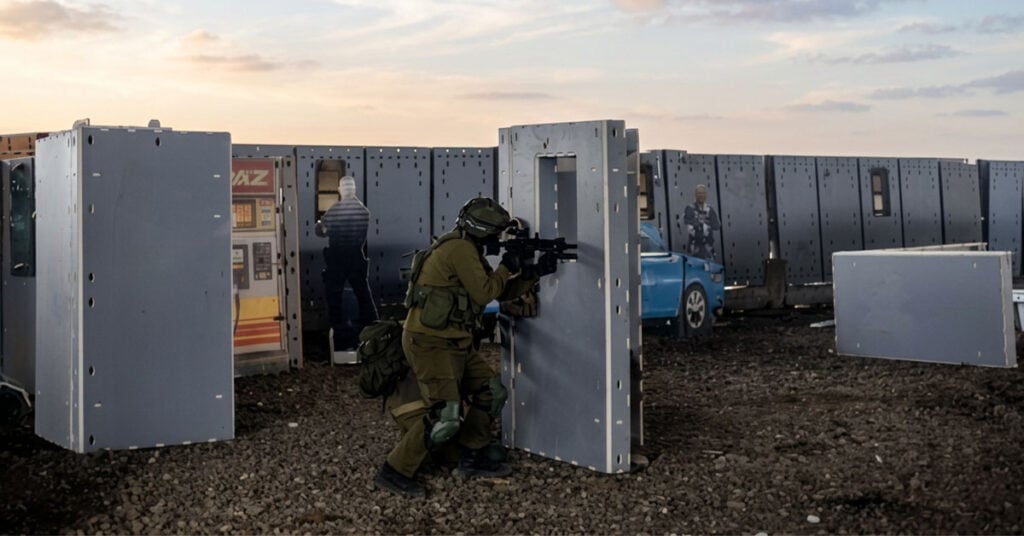
Trango Systems’ Vehicle Target Kits give agencies and training teams a practical way to add that context to training. The kits use full-size flat vehicle targets that can be placed, moved, and combined with other training elements to create realistic street, parking-lot, checkpoint, and urban response scenarios.
The Police Vehicle Kit supports law enforcement response and recognition scenarios.
The Civilian Vehicle Kit adds everyday urban vehicle context.
The Hostile Vehicle Kit helps instructors build adversary-focused scenes with hostile vehicle profiles.
Together, these kits help turn a training space into a scene. And in the field, officers do not respond to a target. They respond to a scene.


Vehicles Change How Officers Read a Scene
A vehicle is never just a shape in the background. Its position changes what officers can see. Its direction changes how the scene is read. Its type changes the meaning of the scenario.
A police vehicle sends one message. A civilian car sends another. A hostile-use vehicle creates a different kind of training problem.
That is useful for instructors because it allows them to build scenarios with more context.
For example:
- A police vehicle can support arrival, response, staging, or team coordination drills.
- Civilian vehicles can create a normal street or parking-lot environment.
- Hostile vehicle profiles can support adversary-focused recognition and engagement scenarios.
- Vehicle angles can change movement routes and lines of sight.
- Multiple vehicle types can create more demanding decision-making.
These are not decorative details. They affect how the trainee thinks.
An officer working through a vehicle-based scenario must process more than a target. The officer must read the environment, understand what belongs in the scene, communicate clearly, and make decisions based on the full picture.
That is the kind of training value vehicle targets bring.
Full-Size Flat Vehicle Targets Add Scale
These vehicle target gives the trainee a realistic sense of height, width, angle, and position.
Their value comes from realistic vehicle shape, recognizable profile, and practical use inside training layouts.
Because the targets are flat, they are easier to move, place, transport, and reset. Because they are full-size, they still give the trainee the visual presence of a real vehicle in the training space.
That combination is practical. It gives training teams a way to introduce vehicle context without turning every exercise into a large logistics project.
A full-size flat vehicle target can help instructors create:
- Street scenes
- Checkpoint-style layouts
- Parking-lot scenarios
- Vehicle approach drills
- Directional recognition exercises
- Movement and communication drills
- Live-fire or simulation-based environments
The Police Vehicle Kit: Building Law Enforcement Context

The Police Vehicle Kit gives instructors a clear law enforcement vehicle profile for police-related scenarios.
Trango’s kit combines front, rear, and side views of a police SUV. This supports vehicle recognition, directional awareness, and target engagement in police-related training settings.
The kit can be used to establish a response scene quickly. It helps define the setting before the exercise begins.
Useful scenarios include:
- Patrol response
- Arrival and staging
- Street response
- Team communication
- Directional recognition
- Mixed layouts with civilian or hostile vehicle profiles
The police vehicle target gives the scenario an immediate operational frame.
The Civilian Vehicle Kit: Adding Everyday Street Context

The Civilian Vehicle Kit adds common non-hostile vehicle profiles to urban and situational training.
The kit combines a cargo pickup, a sport sedan, and an executive sedan. It helps instructors build scenes that look closer to ordinary streets, parking lots, checkpoints, or public areas.
Civilian vehicle targets help help trainees work inside a scene, where not every object is part of the threat picture.
They can support:
- Urban patrol layouts
- Parking-lot scenarios
- Civilian traffic context
- Vehicle-adjacent movement
- Identification and discrimination drills
One civilian vehicle placed in the right location can change what the trainee sees and how the team moves.
The Hostile Vehicle Kit: Creating a Clear Threat Context

The Hostile Vehicle Kit supports adversary-focused vehicle scenarios.
The kit includes hostile-use vehicle and bike profiles: an old sedan at a gas station, an armed pickup, a threat ride bike, and a hostile assault bike. It is built for engagement drills, recognition work, and scenario-based live-fire training where the vehicle itself is part of the threat picture.
This gives instructors a way to create a more specific threat environment.
The vehicle is not only present in the scene. It helps define the problem.
A hostile vehicle profile can help trainees read the connection between vehicle type, location, direction, and scenario context.
Better Training Scenes Support Better Decisions
Good scenario design helps officers think clearly under pressure.
Vehicle targets support that by adding environmental information. The trainee must look, interpret, move, communicate, and respond.
This can support several training goals:
Vehicle recognition
Officers can practice identifying vehicle type and direction from different angles.
A front view gives one kind of information. A side view gives another. A rear view changes the picture again.
Directional awareness
The way a vehicle faces can affect how the scene is understood.
It may suggest movement, arrival, escape direction, staging, or a point of interest.
Communication
Vehicles create reference points.
Officers and instructors can use them to define positions, call out movement, and structure the scenario.
Movement and angles
A full-size vehicle target changes how people move through the training area.
It creates a visual barrier. It affects what can be seen. It changes the trainee’s approach to the space.
Decision-making
A vehicle-based setup can require officers to distinguish between police presence, civilian context, and hostile cues.
That supports better decision-making inside a more complete scene.
Built for Repeated Training Use
Training equipment must hold up.
Trango Systems states that its targets are made from Panel-O-Foam™, a patented composite manufactured exclusively for the company. The material is ricochet-free, can be used with live fire or simulation rounds, and withstands UV exposure, snow, high and low temperatures, and rain storms.
For training teams, this matters because vehicle-based scenarios should not be a one-time setup.
The same vehicle targets can be reused, moved, and placed into new layouts.
That makes them practical for regular training cycles.
Commonly asked questions
Why should vehicle targets be part of police training?
Vehicle targets should be part of police training because vehicles are part of real response environments. They affect movement, visibility, communication, recognition, and decision-making. Full-size vehicle targets help instructors build more realistic street, parking-lot, checkpoint, and urban response scenarios.
What are Vehicle Target Kits?
Vehicle Target Kits are sets of full-size flat vehicle targets used to create realistic training environments. Trango Systems offers Police, Civilian, and Hostile Vehicle Kits for different scenario types.
Are Trango vehicle targets full-size?
Yes. Trango’s vehicle targets are full-size flat targets. They are not 3D vehicle models. Their purpose is to provide realistic scale, shape, and vehicle recognition while remaining practical to move, place, and reset.
3D full-size light-weight vehicle models are also available.
Can vehicle targets be used in live-fire training?
Yes, vehicle targets are made from Panel-O-Foam™, a ricochet-free material that can be used with live fire or simulation rounds.
Why use flat vehicle targets?
Full-size flat vehicle targets provide realistic scale and recognizable vehicle profiles while remaining easier to move, transport, place, and reset. This makes them practical for repeated training and changing scenarios.
Practical Uses for Vehicle Target Kits in Police Training
Vehicle Target Kits can support many types of police and tactical training scenarios.
Common uses include:
- Patrol response drills
- Street response scenarios
- Parking-lot incidents
- Checkpoint-style layouts
- Vehicle approach exercises
- Hostile vehicle recognition
- Civilian vehicle discrimination
- Team communication drills
- Directional awareness exercises
- Live-fire or simulation-based training environments
The main advantage is flexibility.
A police vehicle can define the starting point. A civilian vehicle can add normal street context. A hostile vehicle profile can shift the scenario into a threat-recognition exercise.
Small changes in vehicle placement can create a different training problem.
That is what makes vehicle targets useful. They help instructors build repeatable scenarios that still feel different from run to run.
At Trango Systems, we design training infrastructure that moves with your mission. Our modular mobile solutions give teams the flexibility to deploy, adapt, and train anywhere — without the logistical burden of traditional builds. Whether for CQB, tactical movement, or live scenario preparation, our systems deliver the realism, durability, and mobility that modern forces demand. Contact Trango Systems to transform the way your team trains.