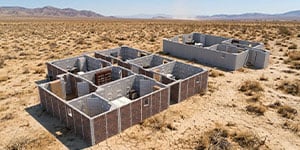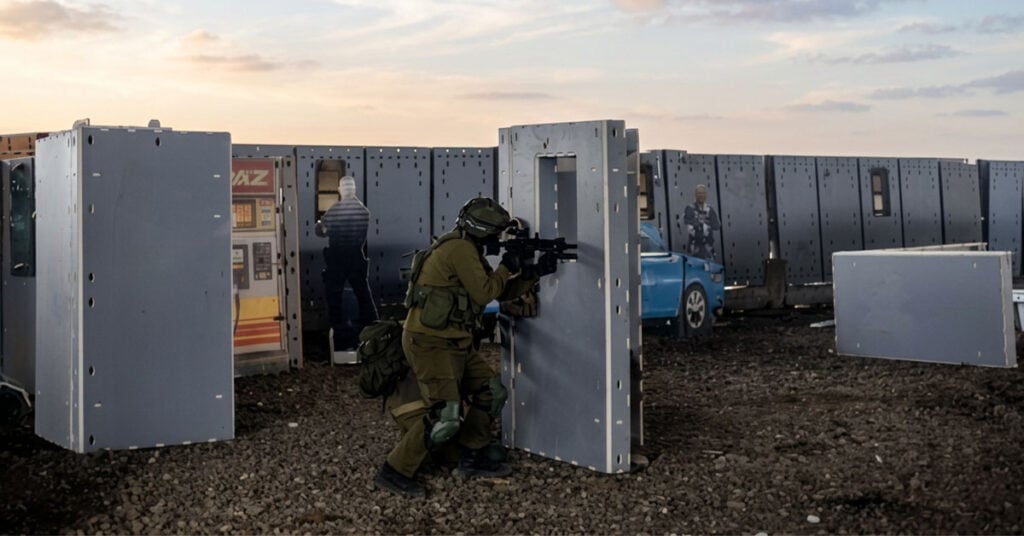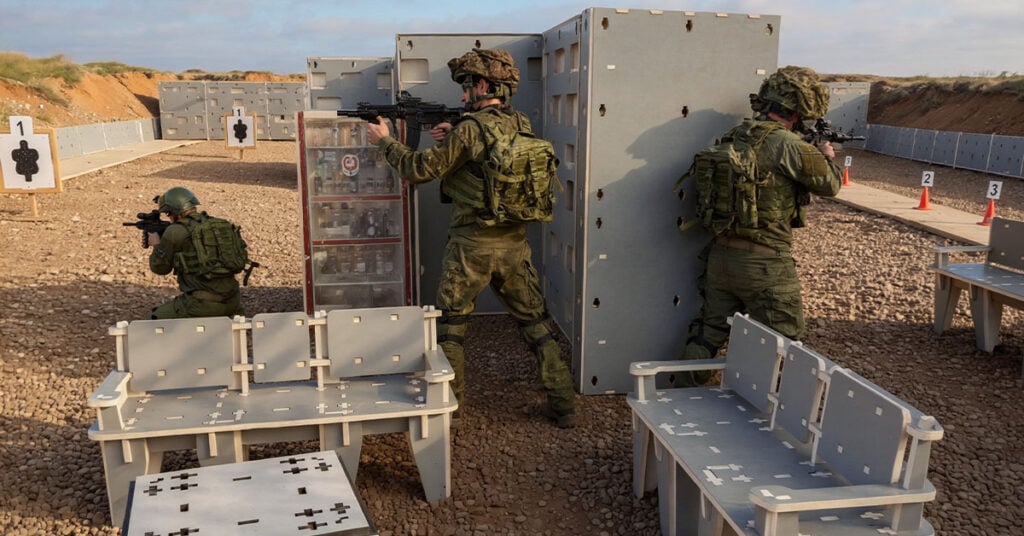
How Barricades are Used
Barricades are standard equipment on most ranges. But their impact depends on how they are built and how they are used.
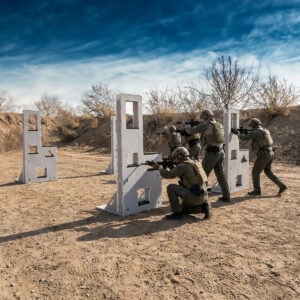
A well-designed barricade supports realistic use of cover, forces proper positioning, and allows instructors to run varied drills without slowing training down.
The details matter more than people think.
Common barricade uses include:
COVER: teaches how to minimize exposure and work angles correctly.
CONSEALMENT: blocks visibility without providing full protection.
OBSTACLE: forces movement, route changes, and repositioning.
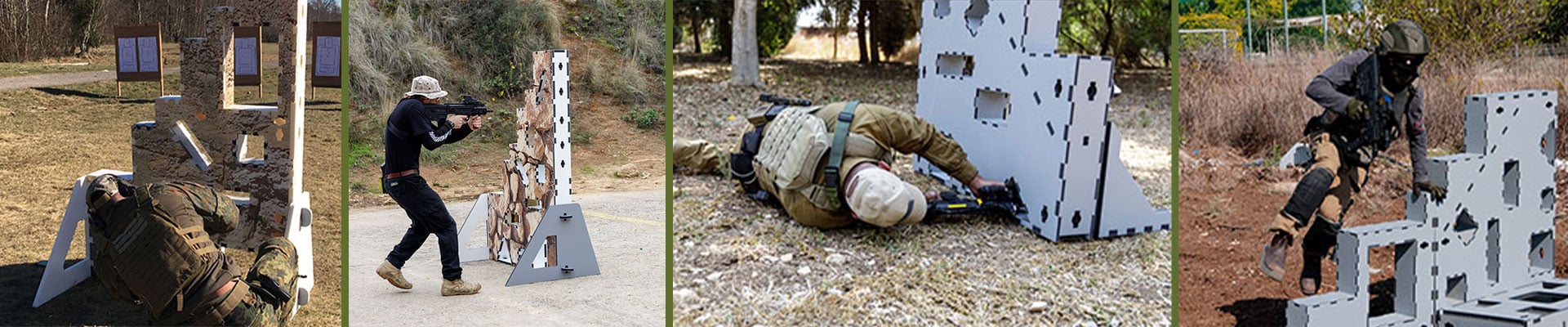
POSITIONAL SUPPORT: creates the need for kneeling, crouching, leaning, support-side shooting.
Each barricade use case targets a different skill
- Cover work focuses on exposure and accuracy
- Obstacle work focuses on movement and decision-making
- Positional use focuses on stability and adaptability
The same barricade should support all of these without modification.
Barricade Thickness Directly Affects Shooting Behavior
Thickness changes how shooters interact with cover.
THIN BARRICADES
- Allow tighter angles
- Reduce the need for proper positioning
- Make edge work easier than it should be
THICKER BARRICADES
- Force realistic distance from the edge
- Require controlled leaning and positioning
- Increase awareness of exposure
- Better reflect real-world structures
In real environments, cover has depth. Walls and structural elements are not flat.
If the barricade is too thin, shooters can rely on positions that may not work outside the range.
This directly affects how habits are built.
Barricade Placement and Orientation Shape the Drill
Barricades do not need complex configurations. What matters is how they are placed. Small changes in position can completely change the training outcome.
COMMON APPROACHES
-
Vertical placement
Standard use for standing, kneeling, and leaning -
Horizontal placement
Forces low shooting positions and changes sight lines -
Offset positioning
Removes predictable angles -
Multiple barricades
Adds movement and transitions between positions
The goal is to avoid repetition. If shooters know exactly where to stand and how to engage, the value drops quickly.
Easy repositioning allow instructors to change scenarios between runs.
Barricade Material Determines Safety in Close-Range Training
Barricades are often used at short distances. Material behavior matters.
Key requirements:
-
Ricochet-free performance
Reduces risk when shooting at close range -
No splintering or fragmentation
The surface should not break into unsafe debris -
Consistent performance under repeated hits
It should behave the same over time
If instructors need to limit drills because of safety concerns, the barricade is limiting training.
When the material is safe by design, training can stay focused on performance.
Barricade Durability and Long-Term Cost of Use
Barricades are used repeatedly and under harsh conditions. They are:
-
hit thousands of times
-
moved frequently
-
exposed to weather
-
stored and re-deployed
The real cost shows up over time.
IMPORTANT FACTORS:
-
High hit tolerance – Ability to absorb large volumes of fire without losing structure
-
Weather resistance – No warping, rotting, or degradation
-
Low maintenance needs – Less time spent repairing or replacing
HOW TO THINK ABOUT ROI
A more useful question than “What does it cost?” is:
How much training can be delivered before the barricade needs to be repaired or replaced?
Because cost includes:
-
replacement frequency
-
downtime during training
-
instructor time spent fixing equipment
-
inconsistency between sessions
A barricade that lasts longer and requires less attention reduces these hidden costs.
Weight and Mobility Affect Training Flexibility
If a barricade is difficult to move, it will not be repositioned often. That leads to repeated setups, predictable drills, and reduced learning value.
What improves usability:
- Manageable weight – the barricade should be light enough for one person to move.
- Compact or foldable structure – easier transport and storage.
- Fast setup – no tools or complex assembly.
Barricade Design Features that Support Real Training
The physical design determines how much value the barricade provides.
Key features:
- Multiple shooting ports – support different heights and shooting positions.
- Irregular structure – prevents repetitive positioning.
- Embedded Multi-functionality – intended for use in different positions (e.g., horizontal and vertical), in combination with other training infrastructure elements, or as a stand-alone training tool, etc.
Barricades don’t make training better on their own. What matters is how they hold up under use and what they force the shooter to deal with. Thickness changes positioning. Material defines safety at close range. Weight and setup determine whether the layout actually changes between runs.
When those factors are right, instructors can run more demanding drills without adding friction. When they’re not, the barricade limits what can be trained. That difference shows up quickly on the range.
At Trango Systems, we design training infrastructure that moves with your mission. Our modular mobile solutions give teams the flexibility to deploy, adapt, and train anywhere — without the logistical burden of traditional builds. Whether for CQB, tactical movement, or live scenario preparation, our systems deliver the realism, durability, and mobility that modern forces demand. Contact Trango Systems to transform the way your team trains.
Commonly asked questions
What is the main purpose of a barricade in training?
A barricade is used to train how to work around physical structures. That includes using cover, managing exposure, shooting from different positions, and moving around obstacles. It gives instructors a simple way to introduce angles, limitations, and decision-making into a drill.
How thick should a barricade be?
Thickness should reflect real-world structures. If it’s too thin, shooters can work unrealistically tight angles and develop bad habits. A thicker barricade forces proper positioning, controlled leaning, and better awareness of exposure, which translates more accurately outside the range.
What makes a barricade safe for close-range training?
The material is the key factor. A safe barricade should:
- be ricochet-free
- not splinter or fragment under fire
- maintain consistent structure after repeated hits
If safety depends on increasing distance or limiting drills, the barricade is not doing its job.
How do you evaluate the real cost of a barricade?
Look beyond the purchase price. Consider:
- how many rounds it can absorb before replacement
- how often it needs repair
- how much time is spent maintaining it
- whether it stays consistent over time
A barricade that holds up under heavy use and requires less attention reduces downtime and keeps training running smoothly.