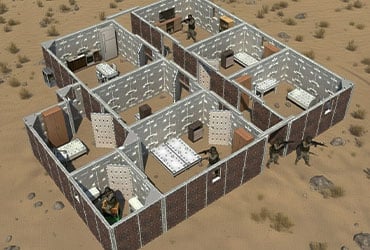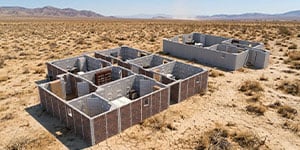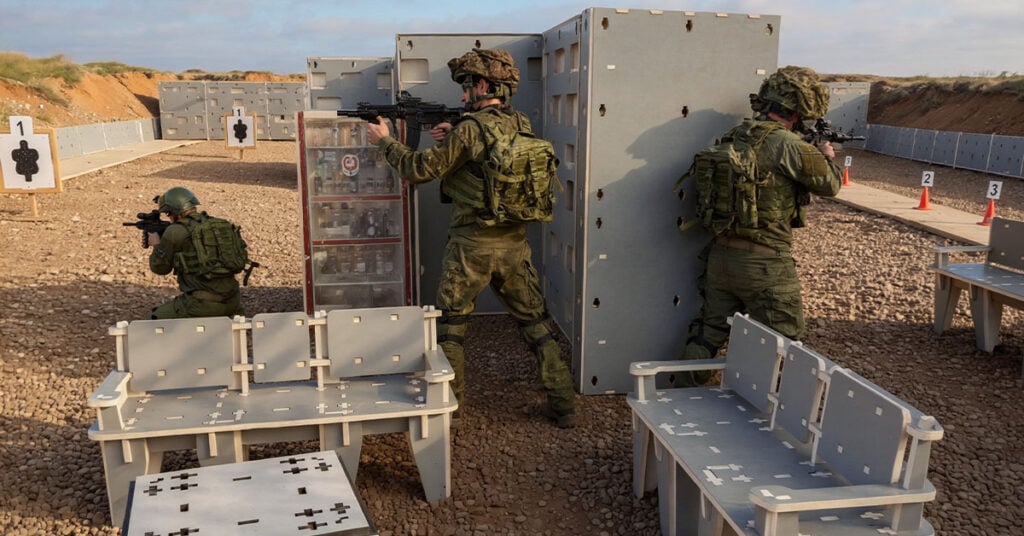
Outdoor tactical scenario training becomes more useful when the training area looks and functions like a defined setting. Vehicles, barricades, Friend & Foe models, street structures, and outdoor furniture help create context around the exercise. The point is not to add props. The point is to give trainees a scene they need to read, move through, and respond to under controlled training conditions.
What makes an outdoor tactical scene work?
A useful outdoor scene does not need to be crowded. It needs to be readable.
Every element should have a role. A vehicle can define a street or parking area. A barricade can interrupt a sightline or mark a position. Outdoor furniture can suggest a yard, patio, public area, or building entrance. Friend & Foe models can create the human decision points that drive the scenario.
The best layouts are usually simple enough to understand and flexible enough to change.
Friend & Foe Outdoor Scenes
Human figures and outdoor accessories for situational training settings
Vehicle Targets
Full-size vehicle profiles for street, range, or parking-area scenarios
3D Vehicles
3D full-size vehicle models for a fuller outdoor layout and realism
Barricades
Obstacles, position markers, covers, shooting angles and positions training aid
Street Training Environments
Routes, walls, corners, entry points, and street-level structures
Outdoor Furniture
Public-space, yard, patio, or exterior-setting detail
Friend & Foe Outdoor Scenes
Outdoor scenarios usually need people in the scene. Friend & Foe Outdoor Scenes support that requirement by combining people models with outdoor accessories.
This matters because target identification is rarely an isolated task in a realistic environment. The surrounding objects affect how the figure is seen and interpreted. A model near outdoor furniture reads differently from a model near a vehicle or a street corner.
Vehicle Target Kits: adding vehicle context
Vehicles are common visual anchors in outdoor scenarios. They help define the place: street, checkpoint, parking area, building exterior, or public space.
Vehicle Target Kits are useful when the scenario needs vehicle context in a practical, easy-to-place format. They can help distinguish different vehicle types in the layout, such as police, civilian, or hostile vehicle representations, where that distinction is part of the training design.


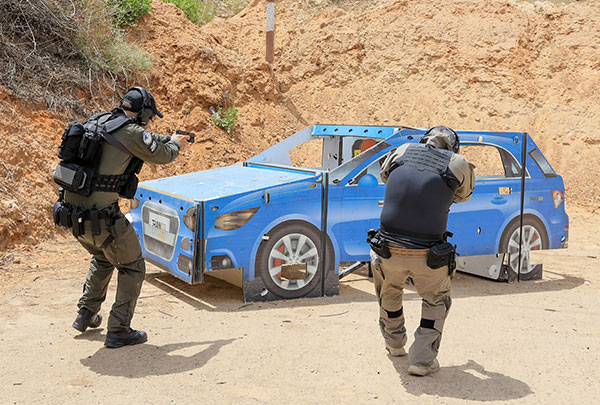
3D Vehicles: when the vehicle needs physical presence
A flat vehicle target can provide visual context. A 3D vehicle adds volume and physical presence. It can help define the shape of a street scene, parking area, or exterior training space. It can also make the layout feel less like a line of targets and more like a place.
Barricades: shaping the outdoor layout
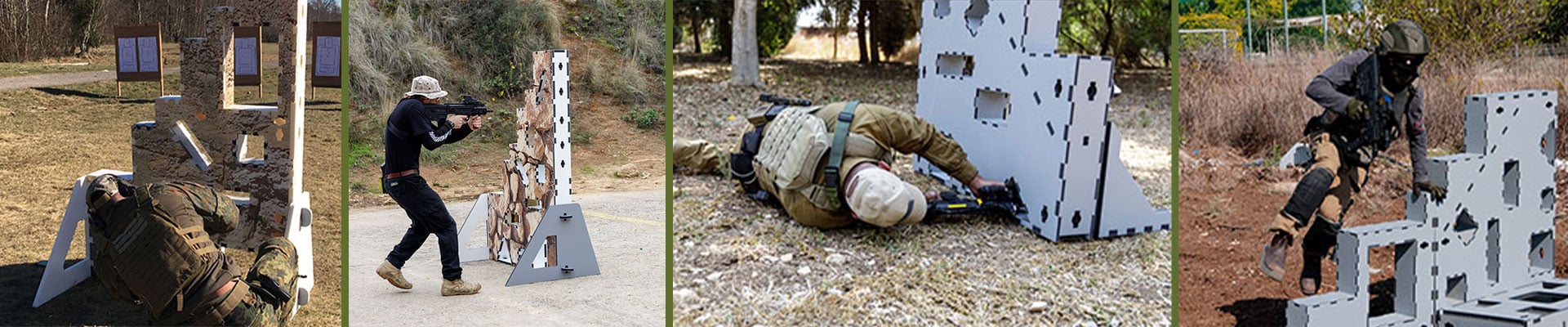
Barricades is an important component of a training infrastructure. In an outdoor scene, a barricade can break up an open area, define a position, separate one part of the layout from another, or create a visual interruption.
Barricades work best when they are connected to the logic of the scene. A barricade placed near a vehicle, target group, street edge, or outdoor furniture area gives the trainee a more structured environment to interpret.
Street Training Environments: giving the scene structure
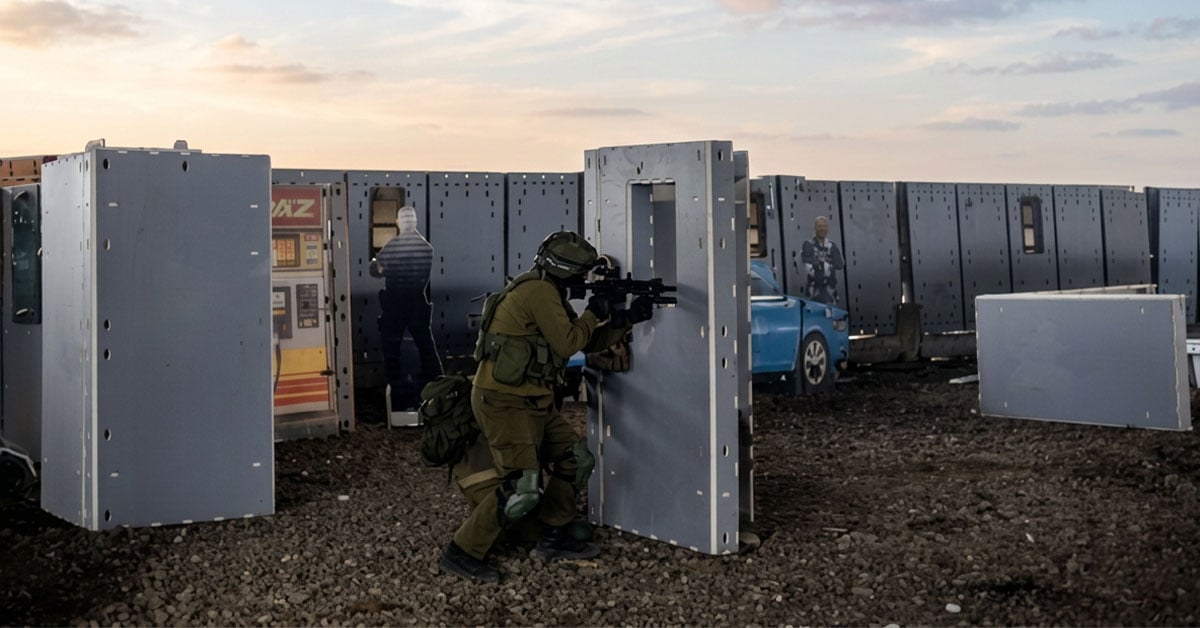
Street Training Environments provide the larger framework for outdoor urban scenarios. They can create street fronts, corners, routes, and building-like exterior context.
This structure makes the other elements work better. Vehicle targets, 3D vehicles, barricades, Friend & Foe models, and outdoor furniture become part of a coherent layout instead of separate items placed on a range.
A street setting also allows the instructor to connect several decision points in one exercise. The trainee reads one part of the scene, moves into the next, and continues through a defined environment.
Outdoor Furniture: making the scene recognizable
Real outdoor spaces are rarely empty. Streets, yards, entrances, patios, and public areas usually contain tables, chairs, benches, planters, and other objects that affect movement, visibility, and decision-making.
Outdoor Furniture helps recreate that physical reality in a training environment. It adds obstacles, visual clutter, and recognizable everyday context. This makes the scene closer to the type of space trainees may need to read and move through in real life.
Furniture should be placed with a clear training purpose. A table can block a direct route. Chairs can create clutter around a target area. Benches or planters can define a public-space setting. These elements help instructors build scenarios that require observation, positioning, communication, and movement around ordinary objects.
Commonly asked questions
How to you build an outdoor tactical training scenario?
Start by defining what the scene should represent: a street, yard, vehicle area, entrance, public space, or mixed outdoor setting. Then choose the elements needed to make that scene clear. This may include Friend & Foe models, Vehicle Target Kits, 3D Vehicles, Barricades, Street Training Environments, and Outdoor Furniture. Each item should support the training objective.
How are vehicle targets used in tactical training?
Vehicle targets add recognizable vehicle context to a training layout. They can help represent a street, checkpoint, parking area, or building exterior. Vehicle Target Kits are useful when the scenario needs visual vehicle representation without a full 3D vehicle structure.
How do Street Training Environments support tactical training?
Street Training Environments provide structure for outdoor urban scenarios. They can create street fronts, corners, routes, and exterior building context. This helps organize other scene elements, such as vehicles, barricades, Friend & Foe models, and outdoor furniture, into a more coherent training layout.
Outdoor tactical scenario training depends on context. A clear outdoor scene helps the trainee understand the setting, identify relevant details, and respond inside a controlled training environment.
Vehicles, barricades, Friend & Foe models, street structures, and outdoor furniture each add a different layer of context. Used together, they can turn an open training area into a structured outdoor scenario.
The best layout is usually the one that uses the fewest elements needed to make the scene clear, repeatable, and easy to adjust.
At Trango Systems, we design training infrastructure that moves with your mission. Our modular mobile solutions give teams the flexibility to deploy, adapt, and train anywhere — without the logistical burden of traditional builds. Whether for CQB, tactical movement, or live scenario preparation, our systems deliver the realism, durability, and mobility that modern forces demand. Contact Trango Systems to transform the way your team trains.