Faced with burgeoning subterranean threats, the U.S. Army in recent years made underground warfare training a major priority. Previously, only elite special operations units trained extensively for tunnel missions (for example, clearing cave complexes in Afghanistan). Now, the Army is pushing these skills to conventional infantry across its brigades. This represents a paradigm shift in military training: treating tunnels and bunkers as a standard element of modern battle, not a niche specialty.
Urgent Focus on Subterranean Warfare
Around 2017, Army leadership undertook a comprehensive review of its outdated underground combat tactics. The result was a dedicated training circular (TC 3-20.50, “Small Unit Training in Subterranean Environments”) published in late 2017 to rapidly get units up to speed. This manual provided urgently needed guidance to plan and execute training specifically for subterranean operations. It acknowledged that fighting in sewers, subway systems and cave networks had been neglected in past training. With potential conflicts looming in North Korean bunker cities or mega-city subways, the Pentagon recognized that “special operations forces will not be able to deal with the subterranean problem alone” – regular infantry must be equipped and trained to fight underground as well.

Investing in Training Facilities
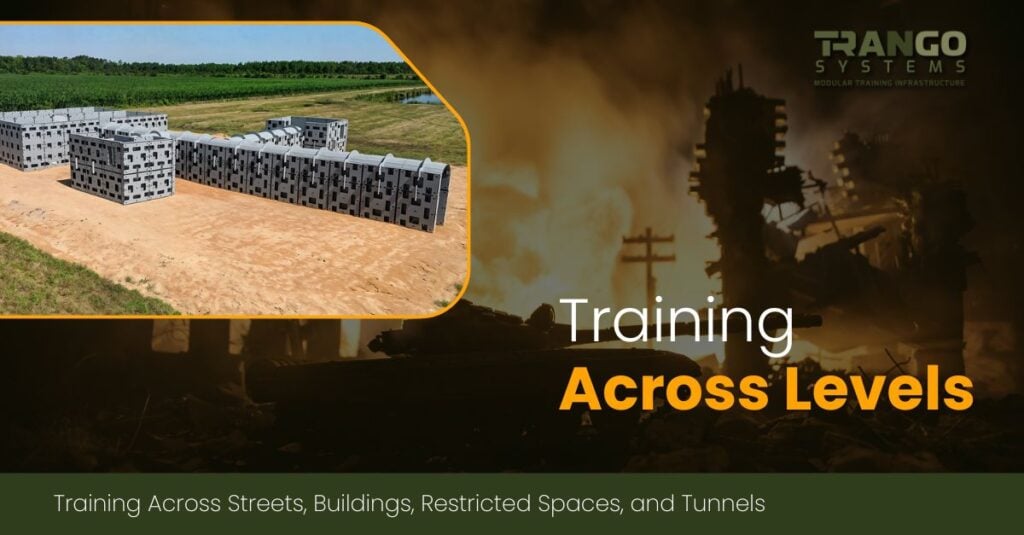
The Army poured resources into building new training facilities that simulate tunnel combat. In fact, it approved a plan to spend $572 million to improve subterranean warfare training across its units (*). That equates to roughly $22 million per Brigade Combat Team, funding both training construction and specialized gear. As part of this effort, the Army’s Asymmetric Warfare Group (AWG) developed a design for modular tunnel training complexes that could be quickly built at bases. Rather than digging actual tunnels (which is costly and dangerous), the solution was to use above-ground shipping containers to create maze-like tunnel environments.
Above-ground modular tunnel network at a U.S. Army training site
Shipping containers and prefabricated structures create a realistic subterranean warfare training environment, complete with twists, turns, and hidden entrances. Such facilities allow full-scale military training underground without digging actual tunnels.
These container-based trainers, first prototyped around 2014, can be configured into a network of dark corridors, intersections, and rooms. Essentially a fake “dungeon” on the surface. Fort Liberty (formerly Fort Bragg) in North Carolina built one of the largest such facilities, simply called Range 68. It consists of about two-thirds of a mile of disorienting tunnels, ladders, hatches, and doorways hidden beneath a mock village on the base. When soldiers enter a shack and descend a ladder, they feel like they’ve gone underground, though the maze actually sits at ground level. This design avoids cave-in risks and allows Range Control to modify the layout.
At Fort Liberty’s Range 68, both conventional units (like the 82nd Airborne Division) and Special Forces teams now hone their tunnel-fighting skills. A training scenario might start in the fake village: soldiers clear a house only to discover a hidden tunnel entrance in a back room. The enemy (role-playing insurgents) flees underground, and the troops must pursue. They experience the kind of situation they’d face against Hamas in Gaza or insurgents in Mosul – chasing foes who disappear into a warren of tunnels. In one exercise, a Special Forces squad used flash-bang grenades and simulated gunfire as they pushed through the container-tunnel, encountering flooding and tight squeezes along the way. The goal is to force soldiers to solve problems under pressure: breached doors, low-oxygen spots, injuries in the dark, lost radio contact, etc., all in a realistic but controlled setting.
Trango Systems: Raising the Bar for Subterranean Training
While military facilities like Range 68 offer valuable experiences, Trango Systems sets a new benchmark in modular underground training solutions. Designed by veterans with firsthand experience in tunnel warfare, Trango’s systems bring unmatched realism, adaptability, and safety to tactical training environments.
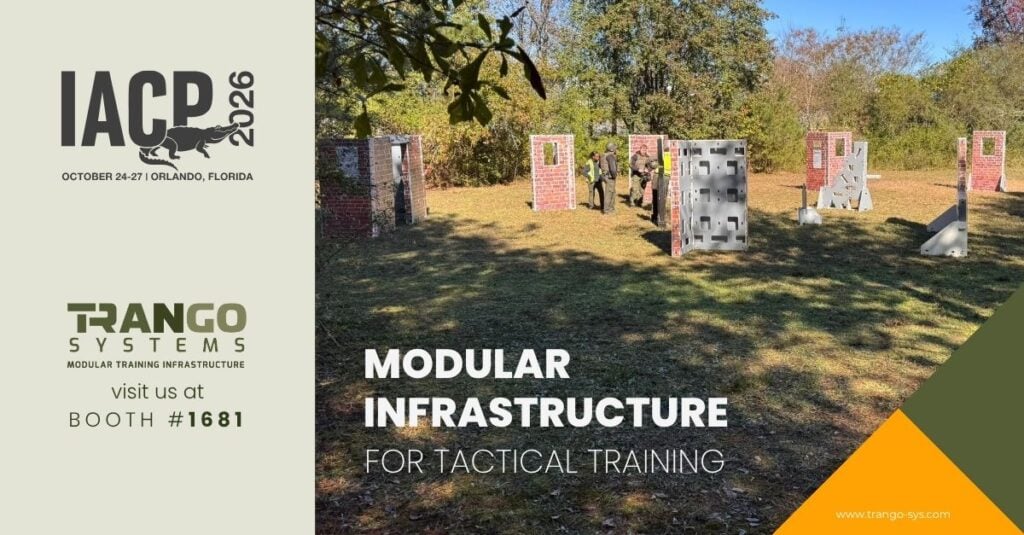
What sets Trango apart is the fully modular design. Every component is built for rapid assembly and complete customizability. This includes tight corridors, T-junctions, and low-ceiling chambers. Instructors can create countless layouts tailored to specific mission scenarios, from basic single-path walkthroughs to complex, multi-entry tunnel mazes. Each setup can be changed in minutes, keeping training dynamic and unpredictable.
Trango’s solutions are also lightweight and portable, enabling deployment in diverse settings: indoors or outdoors. Unlike traditional builds or repurposed infrastructure, Trango’s panels are engineered for easy transport without compromising structural strength.
Realism and safety go hand in hand. The system is constructed with ricochet-free materials that withstand live fire, repeated breaching, and heavy use. This allows for high-intensity exercises without the risks associated with actual tunnels or concrete structures. Trainees can experience the psychological and physical pressures of underground warfare in a safe, controlled environment.
Finally, Trango’s platforms integrate seamlessly with shoot houses and mock villages. This allows full-spectrum combat training: clearing a building and discovering a hidden tunnel, just like real-world scenarios demand.
Trango Systems doesn’t just simulate the underground. It brings it to life: safely, flexibly, and with precision. For militaries and law enforcement agencies seeking top-tier subterranean training environments, Trango delivers the operational edge.
Techniques and Tactics
The Army’s underground warfare schoolhouses teach that many close-quarters battle (CQB) principles carry over from regular urban combat – but with twists. The fundamentals of clearing rooms (teamwork, slicing the pie at corners, quick target discrimination) still apply, “but now do it without light, now do it in a confined space”*. Troops practice moving in a single-file “rat patrol” formation, with each member covering a sector (front security, overhead, rear). Communication is done through taps or handheld signals when radios fail. Special breaching methods are introduced, while managing limited air and potential smoke.
Training also emphasizes situational awareness in the dark. Trainees navigate complex tunnel layouts repeatedly until they can control their fear and think clearly. They learn to use sound and touch, detecting faint noises of enemy movement, feeling air flow that might indicate another exit, etc. After action reviews often happen in the tunnels (with glow sticks for light), so units can immediately discuss what went right or wrong. By rotating through these drills, entire brigades are brought up to a baseline proficiency. This large-scale approach ensures that from leadership down to junior soldiers, everyone gains appreciation of subterranean ops.
To support this, the Pentagon has set up multiple subterranean training sites. As of 2018, the Defense Department identified at least a half-dozen U.S. bases with some form of tunnel training facilities, including Fort Hood (TX), Fort Story (VA), Fort Leonard Wood (MO), Camp Atterbury (IN), Yuma Proving Ground (AZ), and others. Many of these started by repurposing existing infrastructure (like drainage sewers in urban training villages) and then expanded with modular additions. Now in 2025, major exercises routinely incorporate underground scenarios. In the Pacific, the Army’s 2nd Infantry Division in Korea trains to fight in Seoul’s extensive subway system and North Korean bunkers. During a March 2023 exercise, soldiers breached and cleared a simulated underground complex, training to avoid surveillance by moving below street level. This shows how far underground warfare training has come – it’s being woven into the fabric of how the Army prepares for war, from home stations to overseas drills.
Preparing for the Fight Below
Underground warfare is no longer a niche concern. It’s a critical domain in modern combat readiness. From urban tunnels to hardened bunkers, the battlefield beneath our feet demands new thinking, new tactics, and above all, immersive training. The U.S. military has made major strides in adapting to this challenge, developing doctrine, facilities, and full-unit integration.
Yet as threats evolve, so too must training. The ability to simulate subterranean combat with speed, realism, and adaptability is not just an advantage—it’s a necessity. That’s where solutions like Trango Systems’ modular underground training systems prove indispensable. By combining operational insight with engineering precision, they deliver scalable, high-impact training environments that prepare warfighters and first responders for the world’s most complex combat spaces.
In a future where conflicts may be fought just as often below ground as above, readiness starts with realistic training. And realistic training starts with the right tools.