Modular shoot house scenarios are one of the many possible applications of modular training environments.
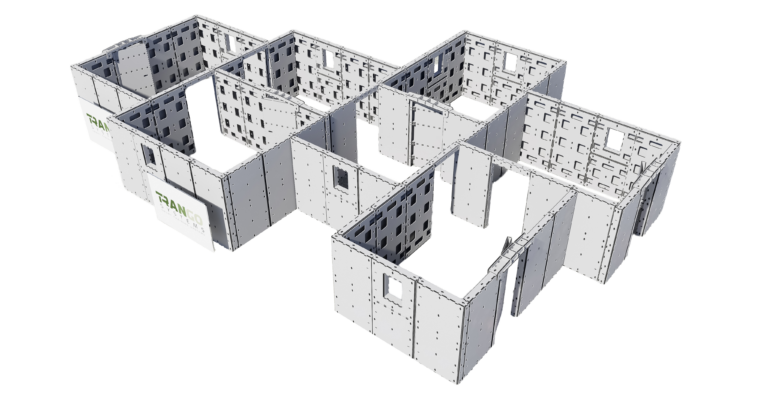
Modular shoot houses can support building-based CQB, medical, K9, communication and investigation scenarios within the same reusable structure. Walls, doors and windows establish the room layout, while furniture, targets, role players and specialist props determine how each room is used. Reconfiguration changes the building geography without requiring a new permanent mock structure.
Application at a glance
| Primary modular setting | Modular Shoot House |
|---|---|
| Typical Trango scene elements | Furniture kits; Friend & Foe targets; scene boards; connected street or tunnel where required |
| Specialist items supplied separately | Medical simulators; canine training aids; evidence props; live role players |
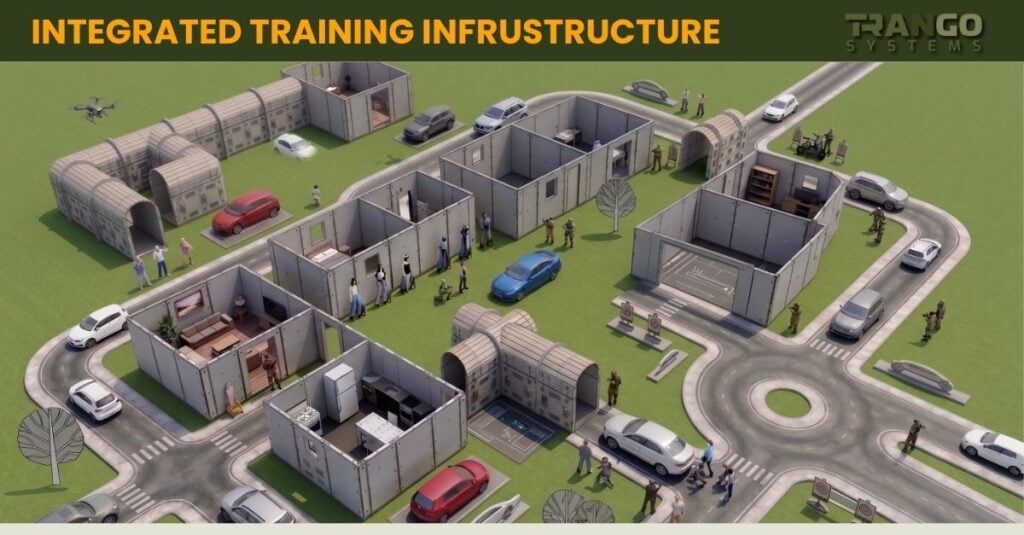
Trango’s Modular Shoot Houses can be reconfigured and connected with other training environments. The same building components can therefore provide several different scenario settings. A building exercise can continue into the surrounding street, linking its occupants and incident narrative with exterior activity.
CQB exercises in recognizable rooms
An empty room mainly presents walls and openings. A furnished room adds objects that interrupt the view and influence how the space is interpreted. A bedroom layout suggests different activity from a home office, even when both occupy the same footprint.
Furniture kits can establish these differences. Friend & Foe targets add represented occupants. Scene boards provide further visual information. The physical layout and the visual content together determine what participants encounter at each doorway.
Suggested scenario: a team moves through a simulated residence containing a living area, bedroom and office. Human figures occupy different positions in each room. The exercise focuses on identification and team communication as the scene becomes visible. A later version retains the rooms but changes the furniture and represented occupants, so familiarity with the walls does not reveal the whole scenario.
Rooms for medical and search exercises
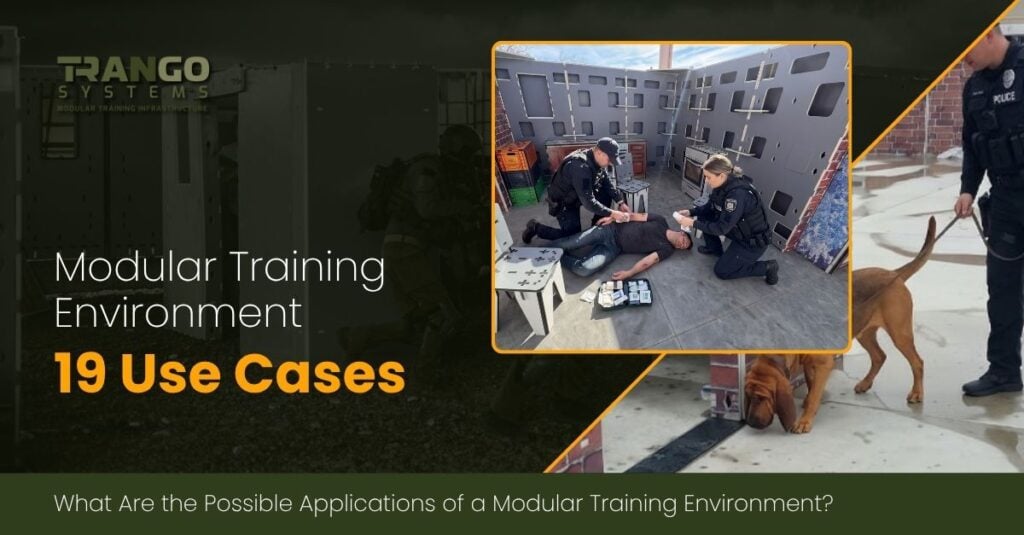
A furnished shoot house could also provide a setting for simulated patient access. A training manikin beside a bed representation creates a bedroom incident; a manikin beyond a corridor turn creates a different location problem. Clinical simulators and medical equipment would supply the medical element of the exercise.
For canine work, the proposed application is a series of rooms and search areas. The walls separate locations, while household props establish occupied-building context. Training odors or people involved in a search exercise would come from the canine training program, rather than the building kit.
Suggested scenario: a simulated casualty is reported inside a residence. Responders establish the correct room location, carry out their scenario roles and communicate with an exterior team. The route continues through the doorway to a street setting. Another exercise uses the building for a canine search with a different room arrangement and separately supplied training aids.
Plan your shoot house
Which shoot house layout fits your scenarios?
Explore Trango’s Modular Shoot Houses: reconfigurable rooms that support CQB, medical, K9, communication and investigation exercises in one reusable structure.
A setting for conversations and scene documentation
Live role players can give a shoot house a communication exercise. A person at a doorway and another in an adjoining room create different perspectives on an incident. Furniture establishes where the conversation takes place and what each participant can see.
The same room arrangement could host an investigation exercise with staged evidence. Investigators could document the relationship between a doorway, furniture items and evidence props. Trango components provide the scene geometry; separate props provide the evidence characteristics.
Suggested scenario: an initial response to a disturbance becomes a scene handover. Participants communicate with role players, establish the incident location and transfer the scene to an investigation team. The later exercise examines whether the scene description matches the furnished layout.
A street environment can extend these building scenarios outdoors. A tunnel can add an enclosed route where relevant. The shoot house provides a reusable building setting whose application changes with the occupants, props and exercise narrative.
Frequently asked questions
-
What training can a modular shoot house support?
The supplied examples include CQB identification, medical simulation, canine search, communication and investigation scenarios.
-
How does furniture change a shoot house exercise?
Furniture gives rooms a recognizable use, changes sightlines and, where physical items are used, occupies space inside the room.
-
Can a shoot house connect to other modular environments?
Yes. A street can extend the building scenario outdoors, and a tunnel can add an enclosed route where relevant.