19 uses for modular rooms, streets, CQB tracks, tunnels and training accessories
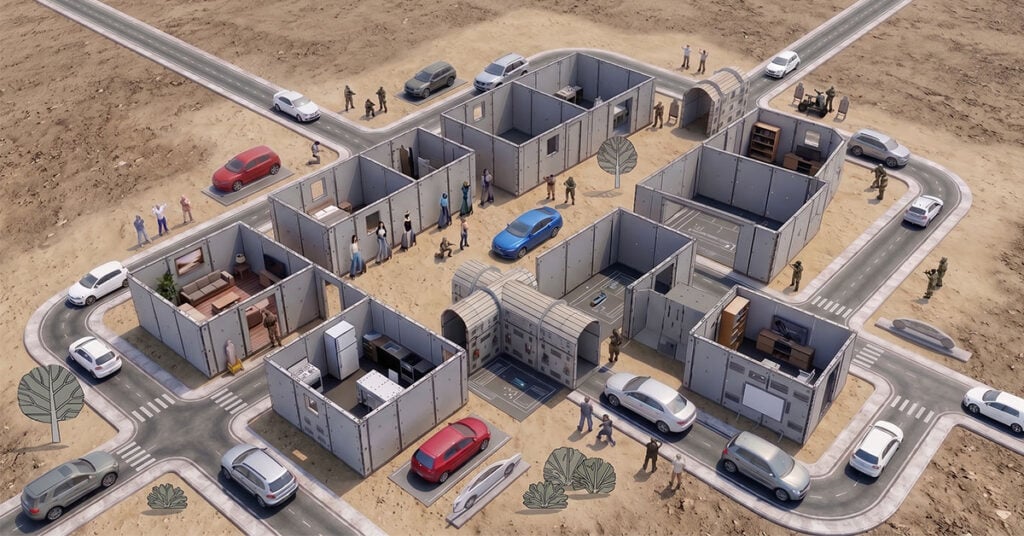
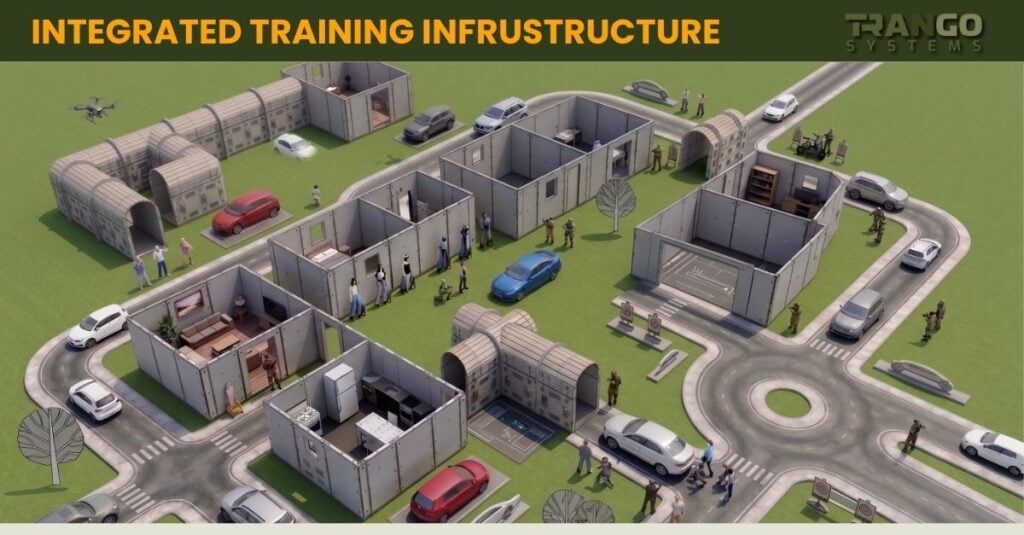
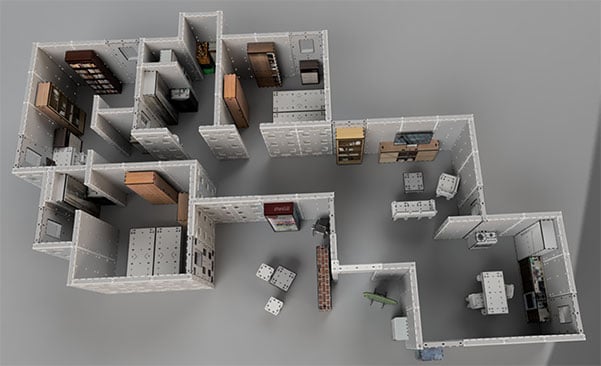
A modular training environment can support tactical, technical and emergency-response applications within the same configurable infrastructure. Shoot houses, CQB tracks, street environments, tunnels, barricades, targets, vehicles and furniture can be combined into different physical settings and reconfigured for different exercises.
Possible applications include CQB, target identification, multi-team coordination, vehicle scenarios, drone and ground robot training, K9 searches, tactical medical response, casualty movement, firefighter search, joint police-fire-EMS exercises, crisis communication, evacuation, crime scene investigation and suspicious-item recognition.
The infrastructure provides the physical setting. Specialist equipment, role players, manikins, training aids and individual training programs provide the activity carried out within it.
Modular training environment applications at a glance
| Application | Primary environment | Typical supporting elements |
|---|---|---|
| CQB track movement and identification | CQB training track | Targets, barricades, vehicles, outdoor furniture |
| Building CQB | Modular shoot house | Furniture, Friend & Foe targets, scene elements |
| Multi-team urban coordination | Street environment and buildings | Vehicles, targets, barricades, outdoor furniture |
| Confined-route training | Modular tunnel system | Scene markers, targets, connected rooms |
| Barricade training | CQB track or street | Targets, vehicles, furniture |
| Target identification and movement | Rooms, tracks and streets | Friend & Foe targets, LIAM moving target |
| Vehicle scenarios | Street, track or building approach | Vehicle targets, 3D vehicles, represented occupants |
| Furnished training scenes | Shoot houses and exterior areas | Household and outdoor furniture |
| Drone training | Rooms, streets and tunnels | 6-Forces scenes, vehicles, targets, furniture |
| K9 search training | Buildings and exterior areas | Furniture, vehicles, separate canine training aids |
| Tactical medical response | Rooms and streets | Manikins, medical equipment, furniture |
| Casualty movement | Buildings and exterior routes | Manikins, stretchers, vehicles, obstacles |
| Joint police, fire and EMS response | Connected buildings and streets | Patients, witnesses, vehicles, furnishings |
| Firefighter search | Furnished building and exterior area | Rescue manikins, furniture, role players |
| Ground robot training | Rooms, streets and suitable tunnels | Furniture, vehicles, observation subjects |
| Crisis communication | Homes, streets and courtyards | Furniture, vehicles, live role players |
| Crime scene investigation | Furnished rooms and exterior scenes | Evidence props, vehicles, furniture |
| Emergency and assisted evacuation | Buildings and assembly areas | Role players, furniture, assistance equipment |
| Suspicious-item recognition | Rooms, streets and passage entrances | Inert props, vehicles, furniture, remote platforms |
1. CQB Training Track: Movement and Identification
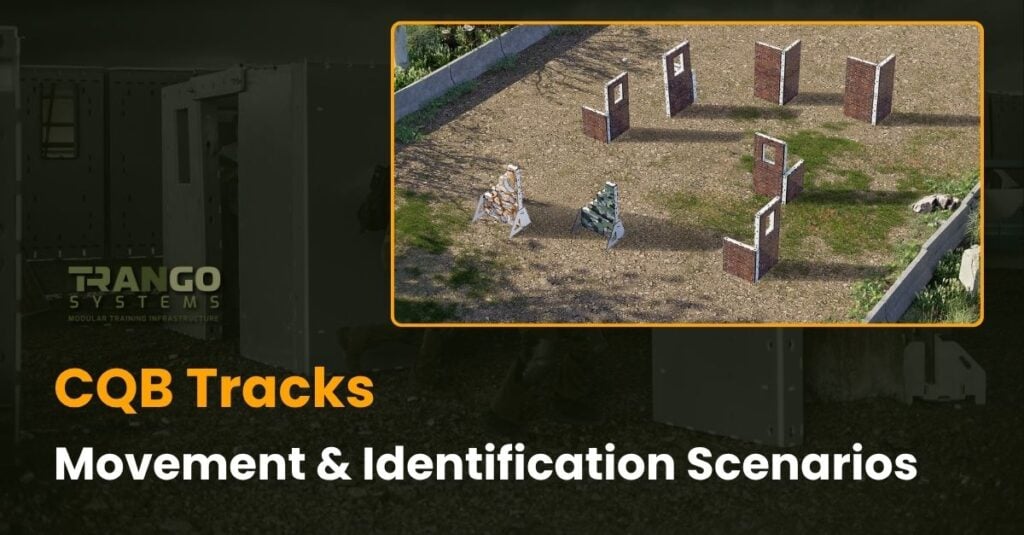
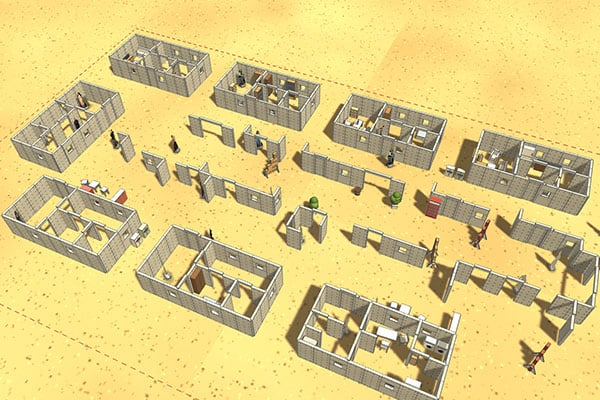
A modular CQB training track creates a configurable route through corners, openings and changing sightlines. It can represent an approach to a building, a passage between structures or a short sequence of exterior urban spaces.
Walls determine when new parts of the scene become visible. Barricades, vehicle models and outdoor furniture add recognizable context, while Friend & Foe targets introduce represented people at different points along the route.
The application can focus on movement, observation, identification and communication as the visible scene changes. Reconfiguration alters the order of corners, openings and objects without replacing the underlying infrastructure.
A CQB track can also connect with a shoot house or tunnel, allowing a focused exterior exercise to become one stage of a larger connected training scenario.
2. Building CQB in Furnished Rooms
A modular shoot house creates connected rooms for building-based CQB exercises. Walls, doors and windows establish the building geometry, while furniture and represented occupants give each room a recognizable purpose.
A bedroom, office and living area present different scenes even when the underlying room dimensions remain similar. Furniture changes visual context and the space available within the room.
Friend & Foe targets can represent occupants in different locations, allowing identification and observation to take place within a populated interior rather than against empty walls.
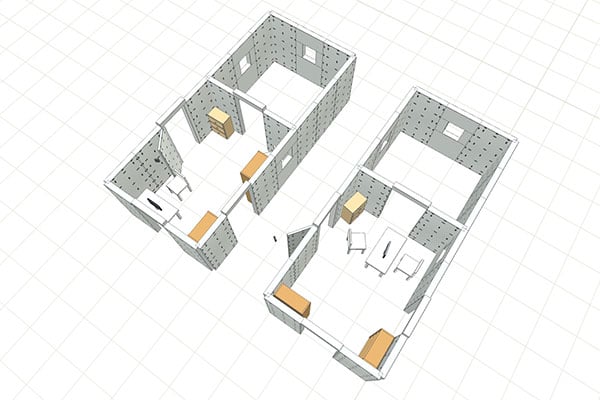
Because the layout and room contents can change, the same structure can support different exercises using the same structure layout. The building can also connect directly with an exterior street or CQB track.
3. Multi-Team Coordination Across Streets and Buildings
Connected streets and buildings allow several teams to work within different parts of the same incident setting.
One team may observe activity beside a vehicle while another works near an adjoining entrance or inside a building. Walls, corners and barricades can prevent every group from seeing the complete scene. Participants therefore work with information associated with their own physical locations.
The environment can include several entrances, courtyards or buildings, and may extend into an enclosed route.
This application uses the physical layout to divide information across an urban environment. Rearranging the streets, buildings and scene elements changes which team encounters each part of the scenario first.
4. Confined-Route and Tunnel Training
Modular tunnel systems add enclosed routes with turns, junctions and restricted forward views to a training environment.
Straight sections create a single route. L, T and X configurations introduce corners and branching locations. Connecting the tunnel with a shoot house allows an exercise to move between furnished rooms and confined passages.
The same infrastructure can support tactical route exercises, drone navigation, ground robot observation and selected search or casualty-location scenarios. A manikin, represented person or scene marker can provide a defined observation subject within the route.
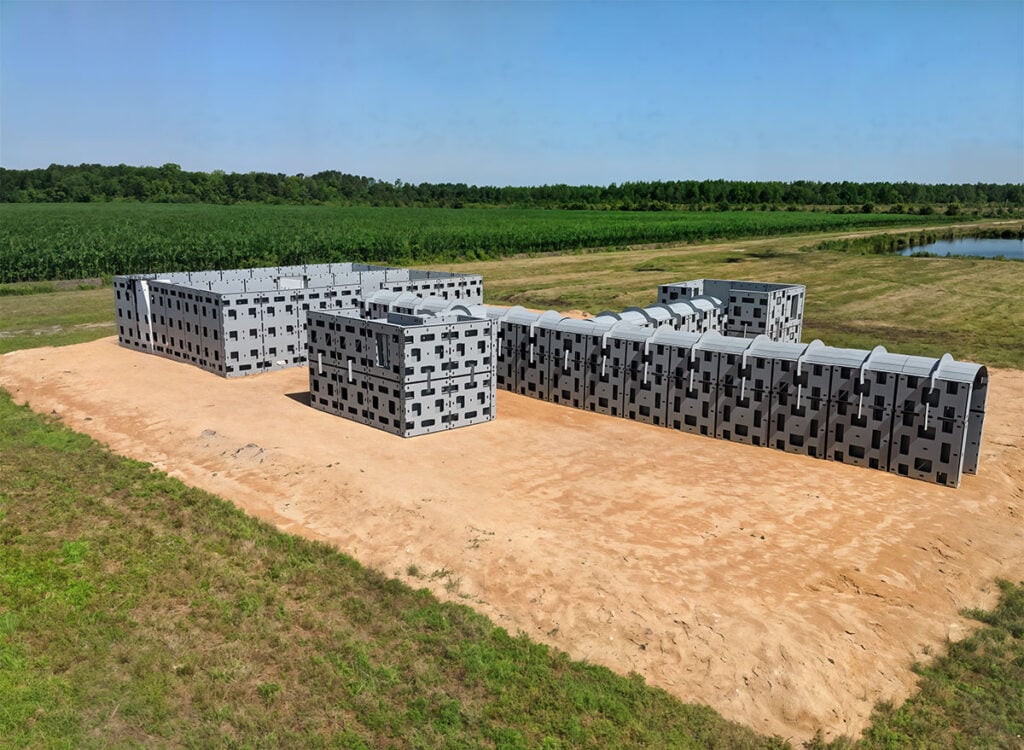
5. Barricade Observation and Urban Scenario Training
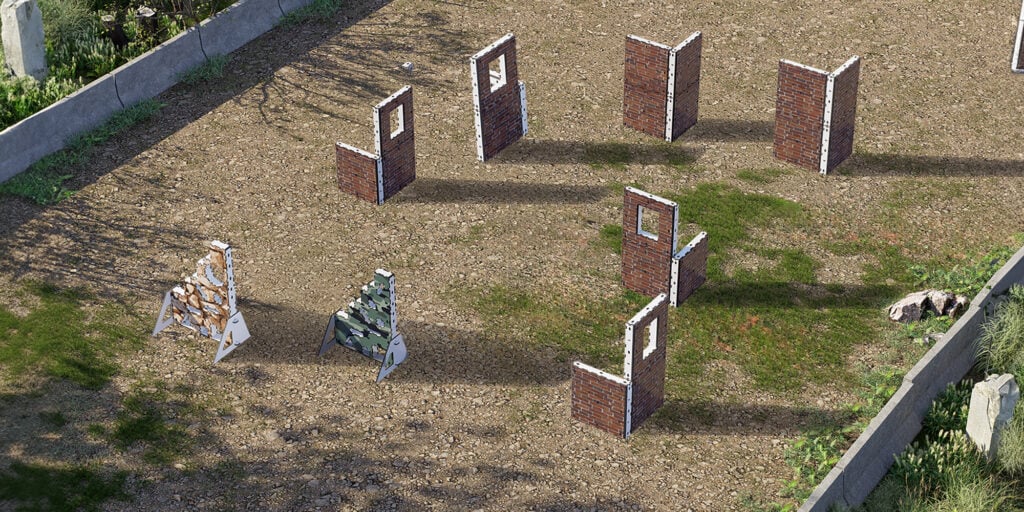
Barricades add openings, edges and partial obstructions to a larger training scene. Their position determines how much of a target, doorway, vehicle or surrounding area is visible from a given location.
A barricade can face a courtyard containing human targets, stand beside a vehicle in a street environment or form part of a CQB track. Moving between its openings changes the available view.
The application can involve firing exercises or non-firing observation and reporting. Drone and ground robot cameras can also view the same barricade from different heights and angles.
In other scenarios, barricades can represent unavailable routes or boundaries within the exercise narrative. Their role depends on the surrounding environment rather than on the barricade operating as a standalone training setting.
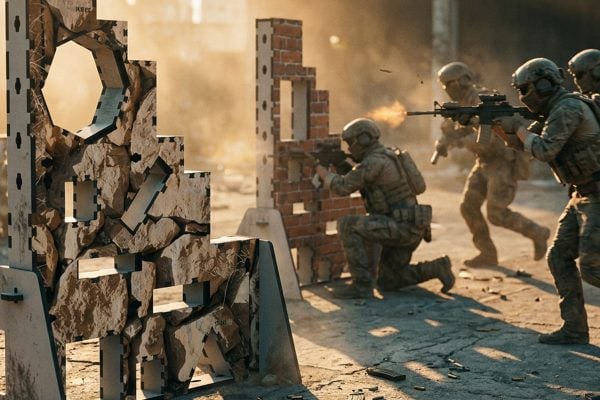
Barricades can also be used for shooting training. Different holes location, size and forms provide basis for exercising shooting from different shooting positions and angles.
Besides that, in tactical training, barricades can be used as obstacles or covers.
6. Target Identification and Moving-Target Scenarios
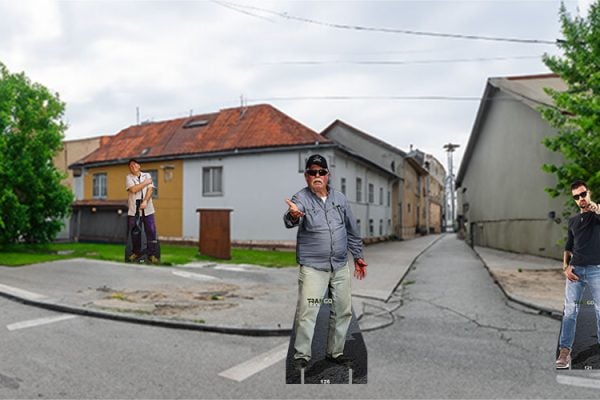
Realistic shoot/no-shoot targets add authenticity to modular rooms, streets and CQB tracks. Their placement allows identification and observation tasks to take place within a wider architectural and visual scene.
Furniture, doors and windows affect when a target becomes visible and how much of the figure can be seen. Vehicles and barricades add additional reference points and partial obstructions.
A moving target introduces another variable. Trango’s LIAM moving target system changes the represented person’s position relative to entrances, vehicles, static figures and other elements during the exercise.
The same arrangement can also support non-firing observation and reporting. Drone or ground robot cameras can locate represented people from remote viewpoints, while participants on the ground observe the same scene from different positions.
7. Vehicle Scenarios in an Urban Setting
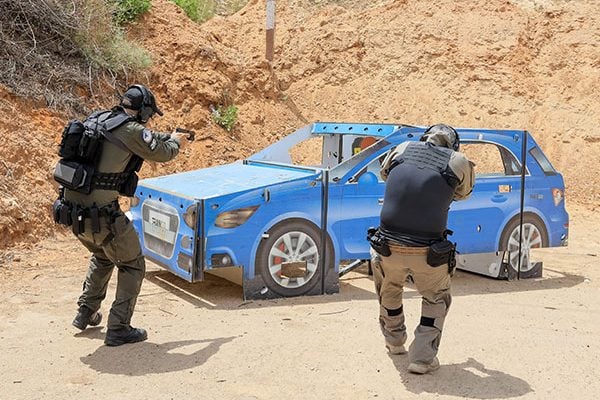
Vehicle elements create recognizable exterior incident locations within streets, CQB tracks and building approaches.
A flat vehicle target provides visual context. A functional 3D vehicle adds physical depth and changes the available route and sightlines around the represented car.
Placed near a building entrance, the vehicle connects exterior activity with an adjoining interior. Friend & Foe targets can represent people around the vehicle or doorway, while outdoor furniture and barricades add additional scene references.
Vehicle elements can also appear in drone observation, ground robot, medical and joint-response scenarios. A manikin beside the vehicle, for example, changes the application from target identification to a simulated casualty scene.
The vehicle becomes part of the incident geography rather than an isolated training prop.
8. Furniture-Based Training Scenes
Furniture changes both the visual identity and the geometry of a modular room.
The same room can represent a bedroom, office or living area by changing its contents. In CQB exercises, furniture places represented occupants in recognizable surroundings and changes what can be seen through openings.
Medical exercises can use furniture to establish the location of a simulated patient. K9 searches can take place across furnished rooms. Communication exercises can position live role players at specific locations. Crime scene investigation scenarios can relate evidence props to desks, seating, doors and other scene references.
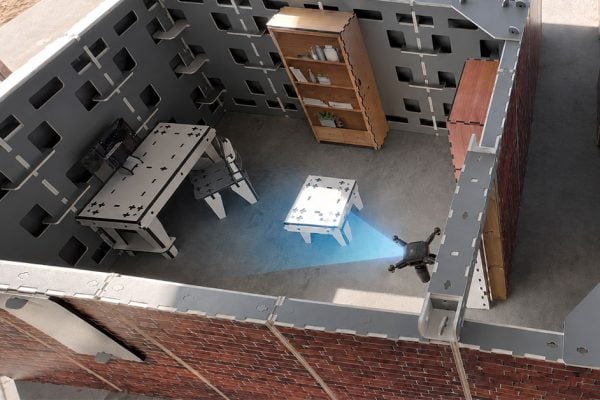
9. Drone Navigation and Scene Recognition
Modular rooms, streets and tunnels provide different physical scenes for drone navigation and camera-based recognition exercises.
Inside a shoot house, openings connect successive rooms and furniture changes the camera view. Streets provide wider scenes containing building entrances, vehicles and barricades. Tunnels add corners and branching enclosed passages.
Trango’s 6-Forces Scenario Target Set provides defined visual subjects for UAS recognition exercises. Operators can identify scene boards and report their positions relative to structures, vehicles and other reference points.
A single exercise can connect exterior recognition with interior observation and confined-route navigation where the aircraft is suitable for those environments.
The modular infrastructure supplies the scene and recognition assets. The aircraft, camera and operator provide the remote observation capability.
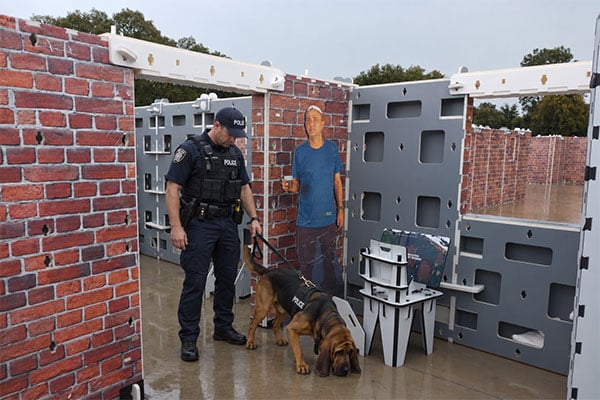
10. K9 Building, Vehicle and Exterior Searches.
A modular shoot house and adjoining street can create several distinct search areas for K9 training.
Connected rooms provide building search locations. Furniture distinguishes bedrooms, offices and living spaces. Exterior layouts add yards, approaches and simulated parking areas. Vehicle models provide recognizable vehicle-related settings.
The canine program supplies the actual search subject, scent source or specialist training aid. The modular infrastructure determines where those tasks take place.
An enclosed passage may extend the search environment where the specific configuration is suitable for the dog and handler.
Changing the wall and street configuration changes the sequence of locations encountered by the dog and handler. A building search can continue into an exterior area, or a missing-person scenario can involve teams working in both locations.
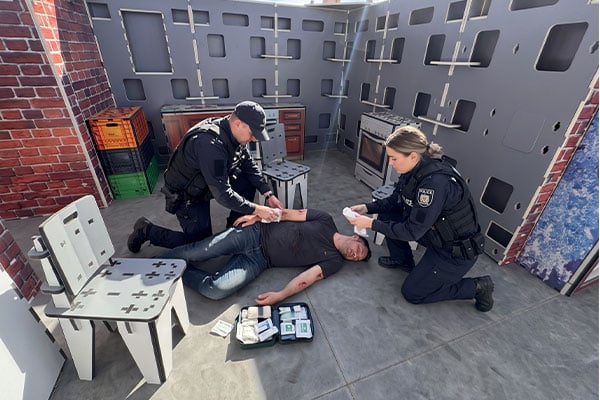
11. Tactical Medical Response
Modular rooms and streets can provide defined locations for simulated patients and medical-response exercises.
A manikin in a furnished bedroom creates a different physical setting from the same patient in an office, corridor or open courtyard. Room connections determine the relationship between the patient and other parts of the incident.
Clinical simulators, patient manikins and medical equipment remain separate from the infrastructure. The modular environment supplies the incident location, physical surroundings and connections between different areas.
The same environment can be reconfigured so that the medical training task occurs in different rooms or exterior locations.
An adjoining street can provide exterior coordination or handover areas. Vehicle models, represented occupants and live role players can add wider incident context.
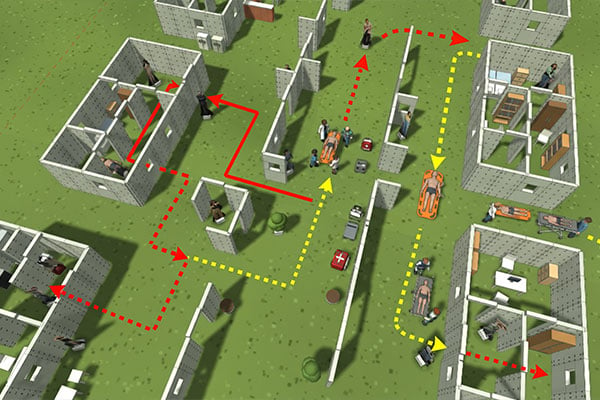
12. Casualty Movement and Evacuation
Connected modular rooms and streets can provide continuous routes for simulated casualty movement.
A patient may begin inside a furnished bedroom or office. The exercise can then continue through adjoining rooms and a doorway toward an exterior receiving area.
Physical furniture affects available space. Vehicles, barricades and outdoor furniture create additional exterior reference points and route conditions. A scenario can also mark one path as unavailable and continue through another section of the environment.
A tunnel or confined area may appear as a reported casualty location without assuming that every route can accommodate a loaded stretcher.
Manikins, stretchers and specialist rescue or medical equipment provide the casualty-handling task. The modular infrastructure supplies the relationship between the initial patient location, movement route and destination.
13. Joint Police, Fire and EMS Response
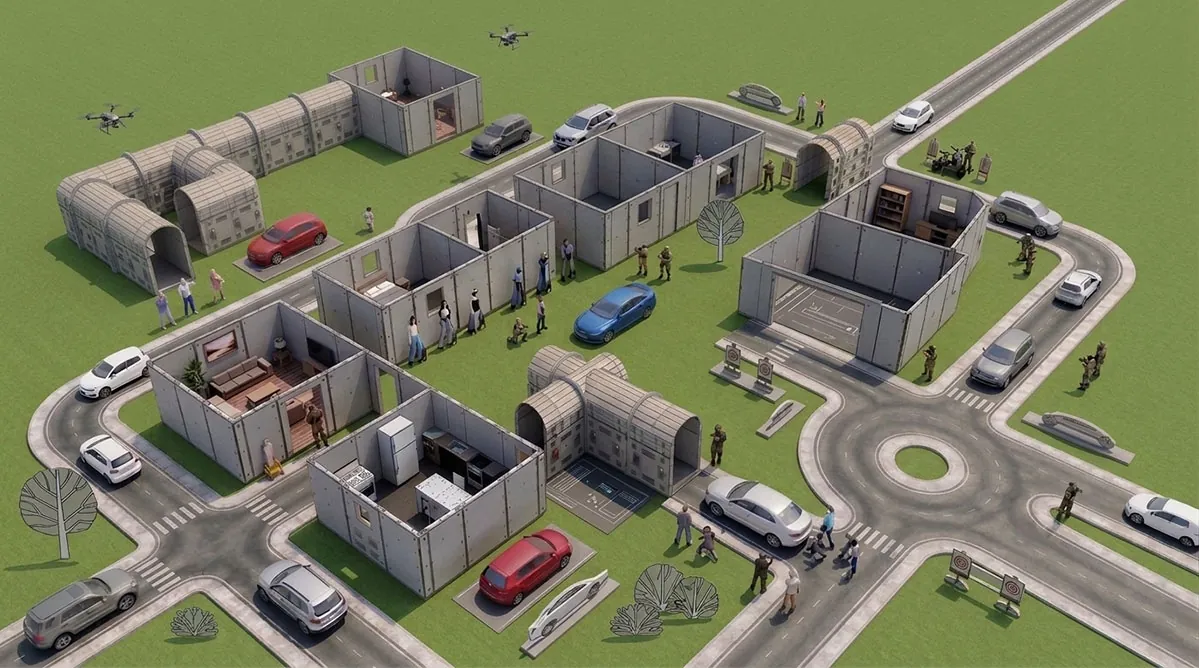
Connected buildings and streets give police, fire and EMS teams a shared physical incident setting.
Different services can work in separate rooms and exterior locations while contributing information about the same event. A shoot house can contain witnesses, represented occupants and simulated casualties. The adjoining street can provide approaches, meeting points and patient handover areas.
Vehicle models, furniture and exterior objects give participants common location references. A missing-person element or remote observation task may extend the scenario into another connected area.
The environment does not define each service’s procedures. It provides the geography within which separate roles interact.
Reconfiguration can change which rooms face the street, where casualties are located and how exterior meeting points relate to the building.
14. Firefighter Search and Victim Location
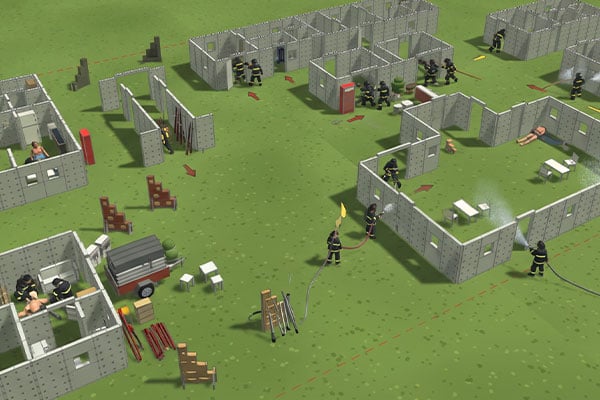
A modular shoot house can provide an intact-building setting for firefighter search and victim-location exercises without actual fire or heat exposure.
Several connected rooms create searchable locations. Furniture distinguishes bedrooms, offices and living areas. Separately supplied rescue manikins provide the search subjects.
The adjoining street can represent the exterior incident area. Live role players may provide information about occupants believed to remain inside, while vehicle models and outdoor furniture give location reports recognizable exterior reference points.
Changing the room configuration alters the relationship between the entrance, search sequence and victim location.
The modular structure supplies reusable interior and exterior geometry. Firefighter equipment, rescue manikins and the specialist training program provide the search content.
15. Ground Robot Navigation and Remote Observation
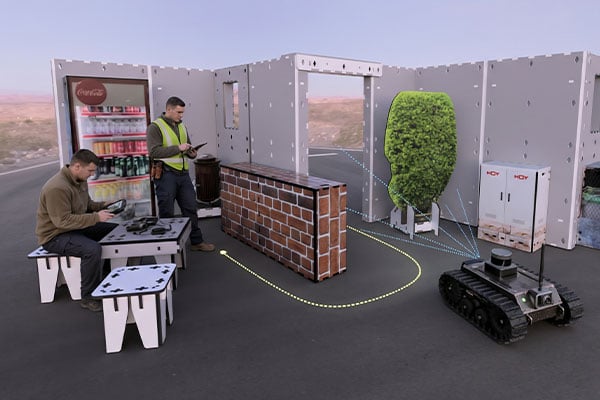
Modular rooms, streets and suitable tunnels can create changing physical scenes for ground robot operators.
The robot views the environment from a low camera position. Furniture, doors, barricades and vehicles therefore appear differently than they do to a standing participant.
Inside a shoot house, the robot can move between furnished rooms and locate represented people or numbered objects.
Exterior scenes can include vehicles, barricades or inert props. Suitable tunnel configurations add corners and junctions that interrupt the forward camera view.
Information from the robot can also become part of a larger search, rescue or suspicious-item scenario.
The robot, sensors and task props are supplied separately. The modular environment provides the spatial context for navigation, camera positioning, observation and reporting.
16. De-escalation and Crisis Communication
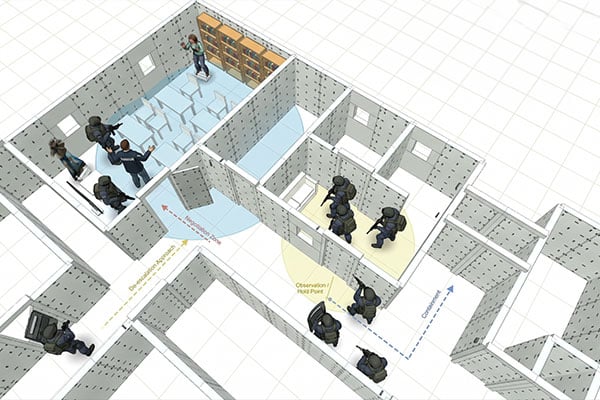
Modular homes, streets and courtyards provide defined locations for communication exercises involving live role players.
A conversation at a doorway differs physically from one inside a furnished room or beside a vehicle. Participants in different locations may see different parts of the scene or receive different information.
Furniture establishes domestic or workplace context. Vehicle models and outdoor furniture create exterior public settings.
Friend & Foe targets may represent additional static people, but live role players provide speech, reactions and changing behavior.
Communication can also take place alongside another scenario. A participant may speak with a relative while another team conducts a medical, search or evacuation exercise elsewhere in the environment.
17. Crime Scene Investigation
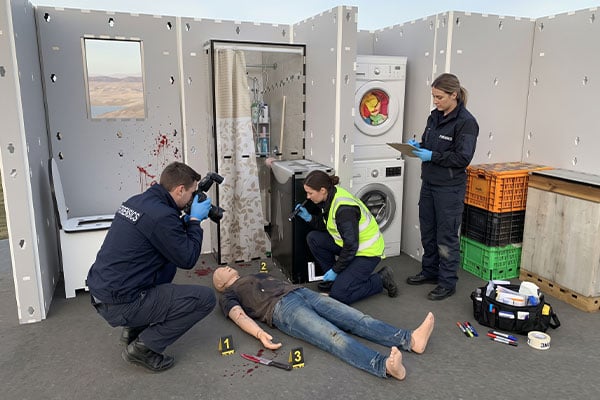
Modular rooms and adjoining exterior areas can provide staged environments for crime scene investigation training.
Inside a shoot house, furniture gives evidence props defined locations relative to doors, rooms, desks and other objects. A street environment extends the scene to courtyards, vehicles and exterior areas.
Vehicle models, outdoor furniture and barricades provide additional reference points. Live role players can represent witnesses whose accounts relate activity inside the building to exterior events.
The same environment can also host consecutive exercises. An initial response can be followed by a handover to investigators, allowing reports from the first participants to be compared with the later documented scene.
18. Emergency and Assisted Evacuation
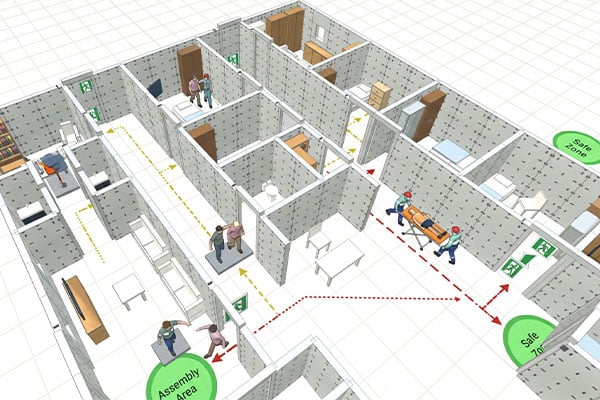
A modular workplace or residence can provide occupied rooms and defined routes for emergency and assisted evacuation scenarios.
Participants can begin in different rooms, including visitors unfamiliar with the building or people requiring assistance. Furniture gives the starting locations recognizable identities.
An adjoining street provides an exterior assembly area. Vehicle models and outdoor furniture create reference points around that location.
A barricade or marked scene element can represent a route described as unavailable within the exercise narrative, allowing the scenario to continue through another connection. The exercise may also continue with occupant accountability and a search for someone who remains unaccounted for.
19. Suspicious-Item Recognition and Reporting
Modular rooms and street environments can support observation and reporting exercises involving inert objects.
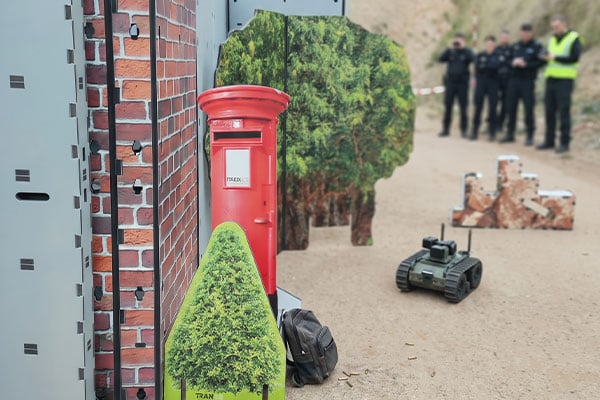
A package in a furnished office, a bag beside a vehicle or an object near an entrance presents different location and visibility conditions. Furniture and ordinary scene objects provide context for describing the item.
Exterior scenarios can include vehicle models, outdoor furniture and barricades. These elements create recognizable reference points and can alter what different participants can see.
A drone or ground robot may provide a remote view of the same inert object. The exercise can also include an information handover to a simulated specialist team.
How Can the Same Modular Environment Support Different Applications?
The applications differ primarily through configuration, scene content and specialist equipment.
A shoot house used for CQB can later become a furnished medical scene, K9 search area, crisis communication setting or investigation site. A street environment can support multi-team coordination, vehicle scenarios, evacuation, remote observation or joint response. A tunnel can provide confined navigation, drone training or a reported search location.
Targets, furniture, vehicles, barricades and scenario props change what participants encounter inside the same underlying infrastructure.
This separation between physical environment and training content allows one modular facility to support multiple programs without treating every application as a separate permanent structure.
Frequently Asked Questions
-
What is a modular training environment?
A modular training environment is a configurable physical training setting built from reusable components. Depending on the system, it can include rooms, walls, streets, CQB tracks, tunnels, barricades and other scene elements that can be rearranged for different exercises.
-
What training applications can use a modular environment?
Applications can include CQB, target identification, urban coordination, vehicle scenarios, drone and ground robot training, K9 searches, tactical medical response, casualty movement, firefighter search, joint-response exercises, crisis communication, evacuation, crime scene investigation and suspicious-item recognition.
-
Can the same modular facility support several training disciplines?
Yes. The same rooms, streets and other structures can support different applications when the layout, furnishings, targets, props and specialist equipment are changed. Specialist training content remains the responsibility of the relevant training program.
-
Can a modular training environment be reconfigured between scenarios?
Reconfigurability is a defining feature of Trango's modular systems. Changing room connections, routes and scene elements allows the physical environment to present different layouts and relationships between training locations.
Modular Infrastructure as a Multi-Application Training Environment
A modular training environment can support a broad set of applications because the permanent requirement is reduced to a configurable physical framework. Rooms, exterior areas, confined routes and scene elements can be rearranged and reused, while individual training programs supply the people, specialist equipment and exercise content.
The 19 applications above illustrate how the same infrastructure can serve tactical, technical and emergency-response training without assigning every discipline its own fixed facility.
For deeper information on each application, the individual articles in this series examine the relevant structures, scene elements, limitations and example scenarios in greater detail.