Split-second decisions can mean the difference between mission success and catastrophic failure. Law enforcement and military personnel face scenarios where they must identify threats among civilians, distinguish hostages from captors, and make accurate calls under pressure.
These drills prepare operators for the mental and physical demands of real-world engagements. The right approach combines realistic target selection, smart scenario design, measurable performance metrics, and awareness of common training mistakes. This guide breaks down each component to help trainers build drills that actually work.
Understanding Shoot/No-Shoot Target Drills
Shoot/no-shoot drills train personnel to make threat assessments under time pressure. Unlike standard marksmanship training that focuses on accuracy alone, these exercises add a cognitive layer. Trainees must evaluate each target, determine if it poses a threat, and act accordingly.
Research shows that decision-making performance improves when training incorporates realistic visual cues and situational complexity. Officers who trained with tactical gaze control and visual attention strategies made 34% more correct shoot decisions compared to those who received traditional speed-and-accuracy training. The key difference was learning where to look and what to prioritize, not just how fast to shoot. (PubMed, Shoot or Don’t Shoot).
The stakes are high. Studies of law enforcement shootings found that 14% involved “perception shootings” where officers mistook harmless objects for weapons. Proper training with shoot/no-shoot targets directly addresses this problem by conditioning operators to check their initial responses and verify threats before firing.
Target Model Selection: Finding the Right Tools
The foundation of any shoot/no-shoot drill is the targets themselves. Trango Systems’ Friend & Foe targets provide the realism needed for effective training.
Visual Realism Matters
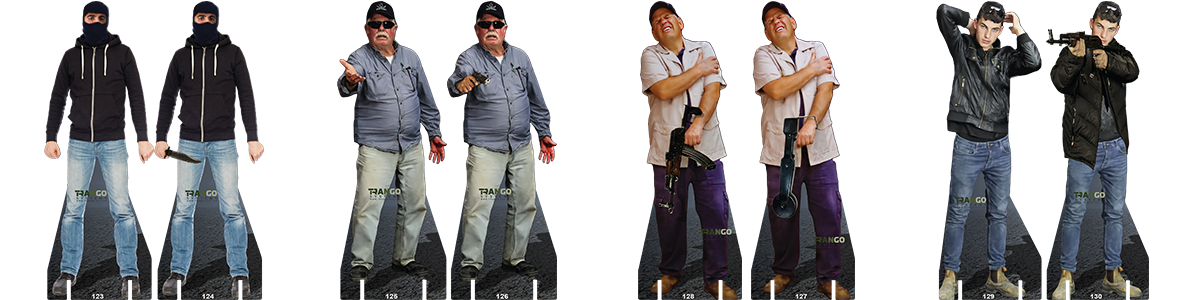
Targets should mimic actual human features, clothing, and postures. Generic silhouettes don’t prepare trainees for the visual complexity of real scenarios. Look for targets with detailed facial features, varied clothing styles, and natural body positions. Trango’s Friend & Foe targets depict civilians, law enforcement officers, hostages, and potential threats in lifelike detail.
Distinguishable Threat Indicators
Effective models include subtle visual cues that trainees must identify quickly. These might be weapons in hand, aggressive postures, or context-specific details like clothing or positioning. The cues should vary enough to prevent pattern recognition. If every armed target holds a pistol in the same way, trainees learn to spot that specific pose rather than developing true threat assessment skills.
Durability for Repeated Use
Training facilities need targets that withstand thousands of rounds. Trango’s targets use Panel-O-Foam material designed for both live-fire and simulation environments. This durability keeps training costs manageable and ensures consistent performance across multiple sessions.
Modular and Customizable Options
The best target systems allow trainers to mix armed and unarmed models or adjust positioning. Trango offers targets in kits containing five models each, available in armed or unarmed configurations. This variety lets instructors create fresh scenarios in minutes.
Scenario Design and Configuration
How you arrange targets determines the training value of each drill. Poor scenario design leads to predictable patterns and wasted training time.
Urban Combat Layouts
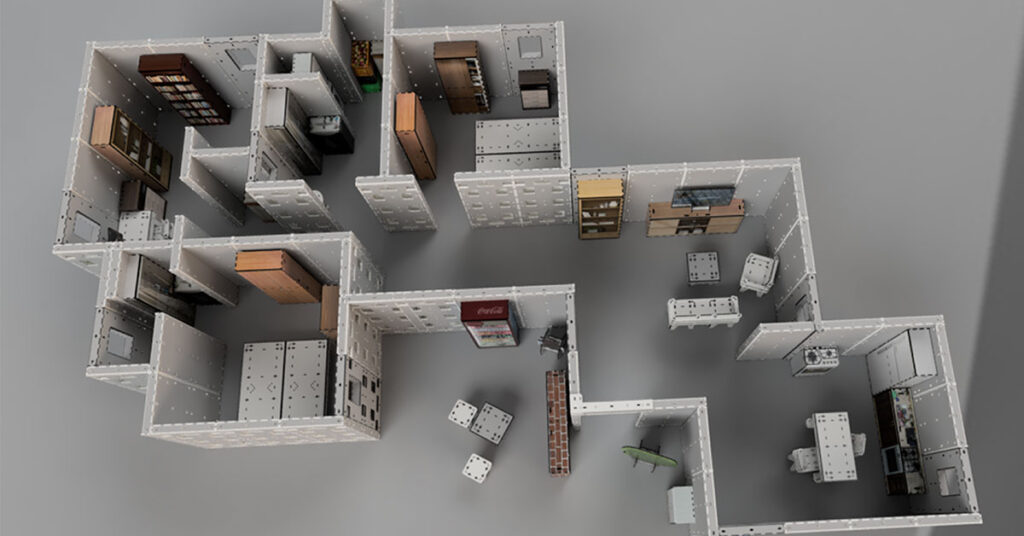
Deploy targets throughout a shoot house or CQB track with a mix of threat and non-threat models. Place them at varying distances and angles. Include partial cover, doorways, and corners where targets appear suddenly. This setup forces trainees to clear spaces methodically while maintaining threat awareness.
Hostage Rescue Simulations
Create scenarios where hostages and captors occupy the same space. Position an armed threat behind or near an unarmed civilian. This trains precision shooting and decision-making under the highest pressure. Trainees must identify the threat, determine a safe angle of fire, and engage without endangering the hostage.
Crowd-Based Environments
Populate a training area with multiple targets representing a crowded public space. Only one or two should be actual threats. This drills the ability to scan, identify, and engage specific targets in high-density situations. It also builds visual processing speed and reduces tunnel vision.
Dynamic Movement
Trango’s moving target systems add another layer of realism. Remote-controlled mobile bases allow targets to traverse different terrain types at variable speeds. Moving targets force trainees to track, lead, and time their shots while maintaining threat discrimination.

Common Pitfalls and How to Avoid Them
Excessive Focus on Speed
Traditional firearms training emphasizes speed and accuracy on predetermined targets. This creates operators who shoot fast but make poor decisions. Prioritize correct decisions over quick shots, especially in initial training phases. Speed develops naturally once decision-making skills are solid.
Unrealistic Stress Levels
Some trainers believe any stress is good stress. Not true. Overwhelming trainees with impossible scenarios or excessive time pressure causes shutdown, not adaptation. Build stress gradually through progressive training phases. Start with simpler scenarios and adequate time, then increase complexity and reduce exposure times as performance improves.
Inadequate Feedback
Shooting without knowing the results provides no learning opportunity. Immediate feedback is essential. Use after-action reviews to discuss what trainees saw, how they decided, and what they would do differently. Video review of training runs reveals patterns trainees don’t notice themselves.
Neglecting Tactical Gaze Control
Where trainees look determines what they see. Research shows that focusing on hands and hip regions (where weapons appear) improves threat detection more than watching faces. Incorporate tactical gaze training into shoot/no-shoot drills. Teach trainees to direct their attention to tactically relevant areas.
Training Progression: From Basic to Advanced
Phase 1: Foundation Building
Start with static targets in well-lit environments. Use clear threat indicators and generous time limits. Focus on correct decision-making above all else. Trainees should achieve 95%+ accuracy on threat identification before progressing.
Phase 2: Adding Complexity
Introduce partial cover, varied lighting, and tighter time constraints. Mix target types more thoroughly. Add communication requirements for team-based scenarios. Expect decision accuracy to drop initially as complexity increases, then stabilize with practice.
Phase 3: Dynamic Scenarios
Incorporate moving targets, changing lighting conditions, and secondary cognitive tasks. Create scenarios that mirror actual mission profiles. This phase integrates all previous skills under realistic pressure.
Phase 4: Stress Inoculation
Add physical exertion, environmental stressors, and consequence-based training. Operators should perform shoot/no-shoot drills after running, climbing, or other physical demands that elevate heart rate and fatigue. This replicates the physiological state of actual operations.
At Trango Systems, we design training infrastructure that moves with your mission. Our modular mobile solutions give teams the flexibility to deploy, adapt, and train anywhere — without the logistical burden of traditional builds. Whether for CQB, tactical movement, or live scenario preparation, our systems deliver the realism, durability, and mobility that modern forces demand. Contact Trango Systems to transform the way your team trains.