This article is part of our series on the possible applications of a modular training environment.
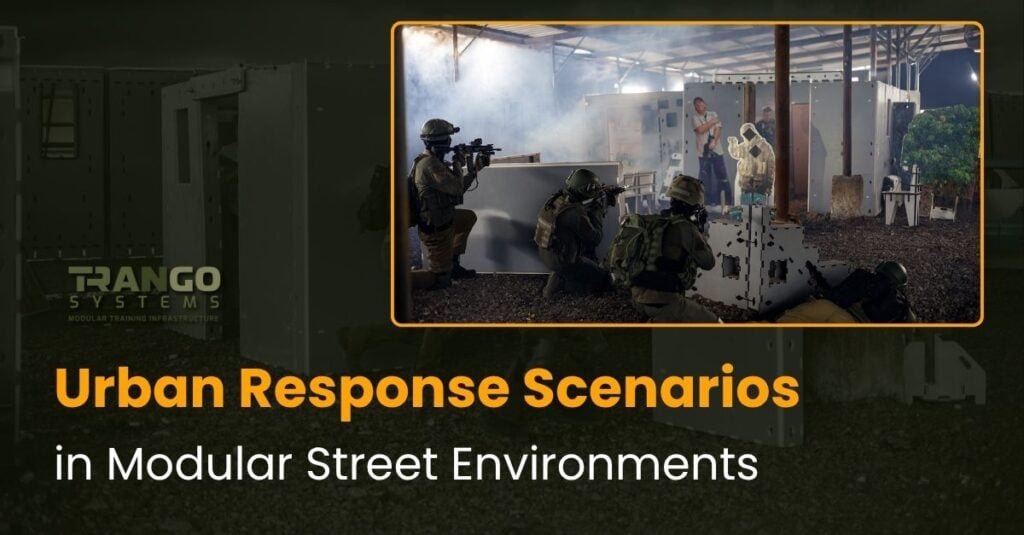
Human and moving targets can turn a modular training environment into a setting for target identification training, observation and scene reporting. Friend & Foe shoot/no-shoot targets represent civilians or adversaries. They may be placed within rooms, streets or CQB tracks. A moving target adds changing location. Furniture, vehicles, walls and barricades provide context that affects when a figure becomes visible and how its position is described.
Application at a glance
| Primary modular setting | Friend & Foe Targets and LIAM Moving Target System |
|---|---|
| Typical Trango scene elements | Shoot house, CQB track or street; furniture; vehicle elements; barricades |
| Specialist items supplied separately | Live role players when speech or changing behavior is required |
Trango’s targets and accessories include Friend & Foe targets and a moving target system. These products can be used within rooms, CQB tracks and street settings. Their positions can connect an identification task with a particular room, a vehicle-related incident or movement through an exterior setting.
Target identification training in furnished rooms
A figure in an empty room is visually isolated. Furniture adds other objects to the view and gives the figure a recognizable location. A human target beside a desk represents a different scene from one near a bedroom doorway.
A modular shoot house can present these scenes in sequence. Walls separate the rooms, while openings determine when each figure becomes visible. Changing the room contents produces different identification tasks within the same building arrangement.
Suggested scenario: participants observe several furnished rooms containing different human figures. The task concerns identifying what each figure represents and describing its location. One room contains office furniture; another suggests a living area. A second exercise changes the figures and furniture positions, making the identification task depend on the current scene rather than remembered target locations.
Movement through a street scene
Trango’s LIAM moving target introduces target movement. Within an exterior layout, that movement can change a figure’s relationship to a parked vehicle, building entrance or barricade. The scene can involve tracking and reporting the represented person’s location as it changes.
Static figures can remain elsewhere in the scene. They provide reference points and keep the exercise from becoming solely about following the moving object. The vehicle model and wall layout establish where the movement occurs, while outdoor furniture adds street context.
Suggested scenario: a moving human target travels within a simulated street area containing a vehicle model and several static figures. Participants distinguish the moving figure from the other represented occupants and report its changing location. A non-firing version can focus entirely on observation and communication between two teams viewing the area from different positions.

Targets and accessories
Need represented people in your scenes?
Trango’s Friend & Foe targets and LIAM moving target system can be placed within rooms, CQB tracks and street settings.
Visual subjects for remote observation
Human targets can provide objects for a drone or ground robot camera to locate. The camera’s viewpoint changes how much of the figure is visible and which surrounding details can be described. Furniture and barricades add partial obstructions that make location reporting more specific.
Suggested scenario: a remote operator observes a furnished room and reports the number and positions of represented people. A ground participant later compares the report with the scene. Another version takes place outdoors, where a vehicle target and barricade provide reference points for describing the human figure’s location.
Targets have a limited role in communication exercises involving actual conversations. Live role players supply speech and responses. Static figures can represent additional bystanders, but their images do not reproduce a person’s changing behavior or intentions.
The modular environment supplies the spaces and views; targets supply represented people. Together they allow exercises to distinguish architectural familiarity from accurate reading of the current scene. Movement adds another variable where the training application calls for it.
Frequently asked questions
-
What is the role of human targets in a modular environment?
They represent people within a scene so target identification training can depend on room layout, furniture and surrounding objects.
-
What does a moving target add?
It changes the represented person’s location relative to vehicles, entrances, barricades and other occupants during the exercise.
-
Can targets replace live role players in communication exercises?
No. Static targets can represent background people, but live role players provide speech, responses and changing behavior.