Urban response scenarios in modular streets are one of the many possible applications of modular training environments.
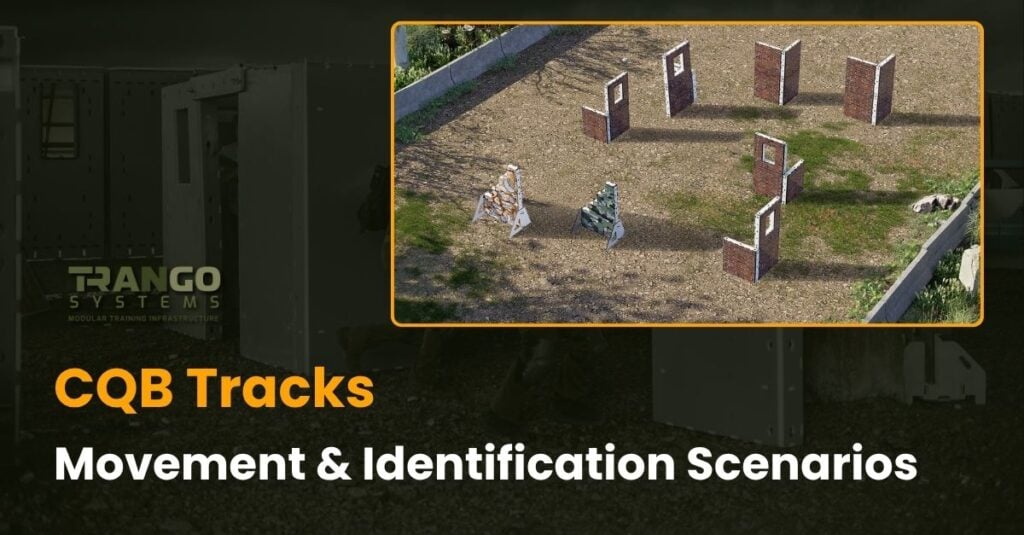
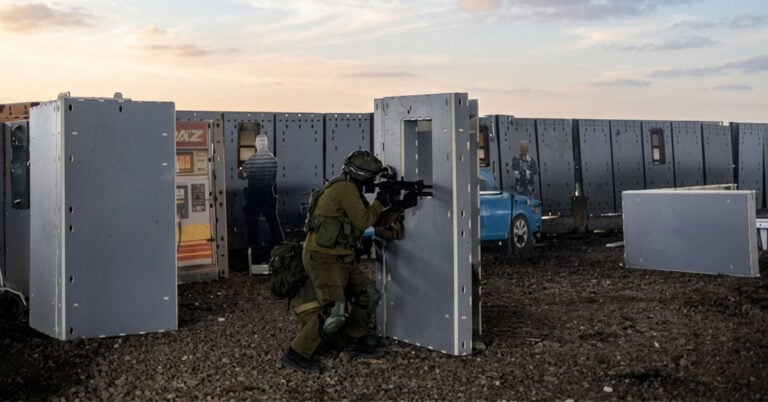
Modular street environments can support urban response scenarios by connecting building entrances, courtyards, approaches and exterior routes within one configurable setting. Vehicles, barricades, outdoor furniture and represented people add incident context. The same street layout can be used for team coordination, joint police-fire-EMS exercises, evacuation scenarios or remote observation.
Application at a glance
| Primary modular setting | SWAT Street Training Environment |
|---|---|
| Typical Trango scene elements | Vehicle models; outdoor furniture; Friend & Foe targets; barricades; adjoining shoot house |
| Specialist items supplied separately | Medical manikins and equipment; drone; live role players where required |
Trango’s SWAT Street Training Environments support configurable urban layouts. These layouts can host tactical coordination exercises and urban response training scenarios such as joint response, evacuation or remote observation. Each application uses the street differently, while retaining the same physical infrastructure.
Coordinated activity across several buildings
A street setting gives teams locations they can refer to during an exercise. A doorway faces a parked vehicle. A courtyard leads to two separate structures. A wall prevents one group from seeing activity in the next area. These relationships make location reporting part of the scenario.
Friend & Foe targets can represent occupants or other figures in the scene. Barricades create partial obstructions, while outdoor furniture establishes a yard or public seating area. A 3D vehicle introduces an object with depth, changing the view from opposite sides of the street.
Suggested scenario: two teams work around adjacent building entrances and a parked vehicle model. Each sees a different part of the scene and communicates observations to the other. The exercise concerns coordination and accurate descriptions of locations. A revised configuration changes the position of the vehicle and adds a courtyard connection, altering which group encounters each scene element first.
A street as part of a medical response exercise
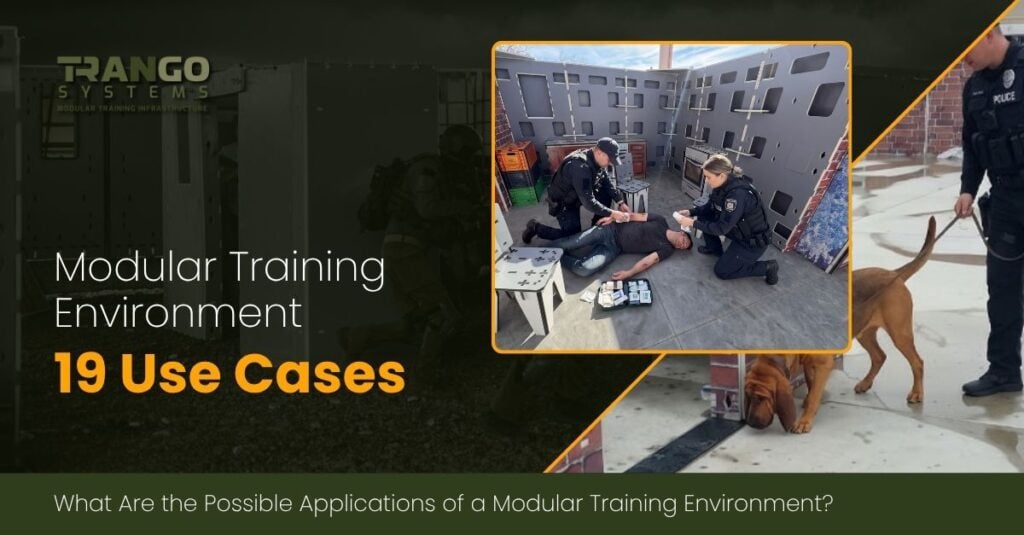
For a proposed police, fire and EMS exercise, the street can represent the area outside an incident building. It gives responders an exterior meeting point and a route between the building and a simulated patient handover location. Separately supplied manikins and medical equipment establish the casualty tasks.
Vehicle targets can identify a parking area or represent vehicles in the incident narrative. Functional 3D vehicles provide physical scene geometry. Neither is assumed to provide an ambulance interior or patient transport equipment.
Suggested scenario: an incident begins inside a furnished shoot house and involves a second simulated casualty in an exterior courtyard. Different services share information about the locations and transfer responsibility for the patients. The street connects the indoor and outdoor scenes, making the handover locations visible within one exercise area.
Plan your street environment
Which street layout fits your scenarios?
Explore Trango’s SWAT Street Training Environments: configurable urban layouts for coordination, joint response, evacuation and observation exercises.
Observation and evacuation in the same setting
A drone operator can view the street through a camera feed while a ground participant sees it from pedestrian height. Vehicles and barricades obscure different scene elements from those viewpoints. Trango’s 6-Forces scenes add a documented UAS recognition application.
Suggested scenario: the drone operator identifies scene boards and reports their relationship to a building entrance and vehicle. A ground team uses that report during its own observation task. The exercise compares descriptions of the same setting from different viewpoints.
The street could also serve as the destination for a simulated building evacuation. Role players emerge from several exits and continue to an exterior assembly location. Outdoor furniture and parked vehicle models establish the surrounding public space without introducing actual traffic.
Rearranging the street changes routes and visibility while preserving the scenario theme. Its contribution is the connection between incident locations, buildings and exterior activity, with Trango accessories making urban response training scenarios more specific.
Frequently asked questions
-
What does a modular street environment add to training?
It creates exterior geography between buildings, including approaches, corners, courtyards and routes around obstacles.
-
What urban response training scenarios can a modular street support?
The scenarios in this article include tactical coordination, police-fire-EMS response, evacuation and drone observation.
-
How does reconfiguration affect the exercise?
Changing building relationships, routes, vehicle positions and obstructions changes what each team can see and report.