
Shoot house is a critical elements of your training infrastructure. Besides, it’s one of the major investments. To get the best value, it’s smart to think beyond the sticker price and look at how design choices will affect both training and long-term costs. With the right approach, a shoot house can be adaptable, durable, and surprisingly cost-efficient.
(click on the image to download PDF)
Modularity Cuts Shoot House Costs
-
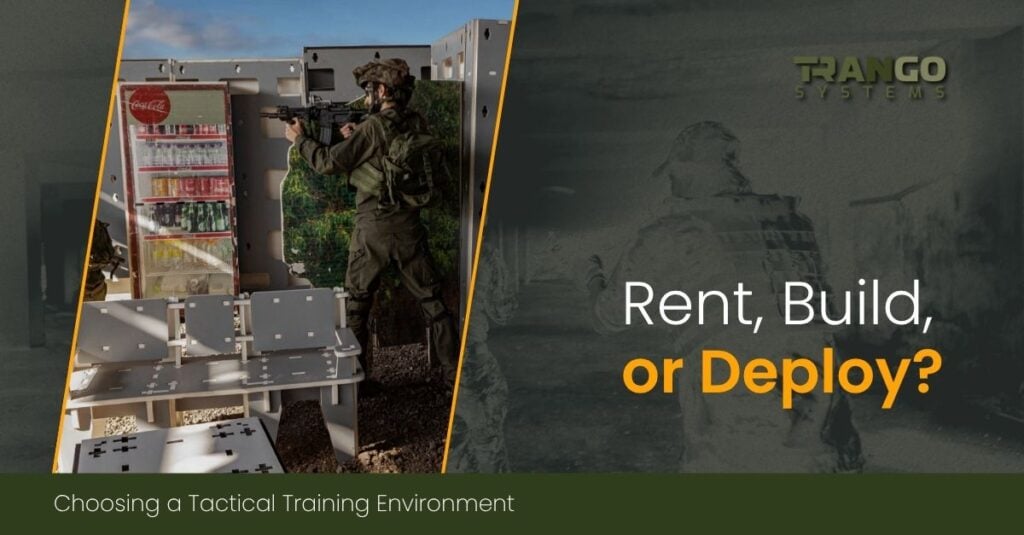
Add or remove rooms: A modular shoot house grows with your training needs. You can enhance or rebuild the structure without starting from scratch every time your needs change or grow. If you’re ready to switch from small team training to larger operations, just add components and you’re good to go. It’s a huge cost difference in changing the whole structure or just adding more elements to the existing one.
-
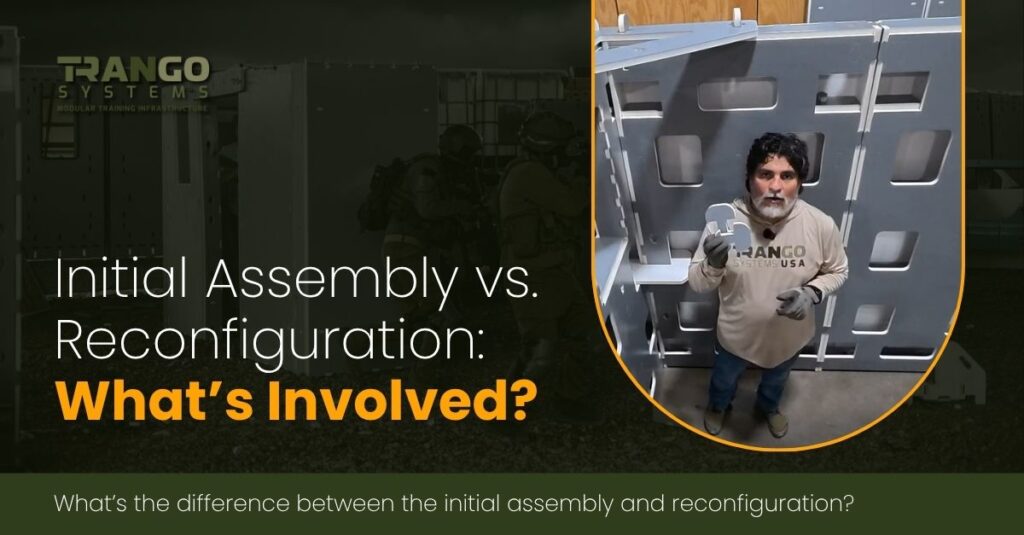
Tool-free connections: Modular structures that require minimal tools or no tools at all to assemble, save on labor and reduce setup delays. Tool-free connections allow saving on multiple levels: materials, man hours, training time, etc.
-
Multiple layouts: Change the floor plan to keep scenarios fresh. When trainees face new challenges regularly, you get more value from the same structure.
-
Standard modules: Such modules simplify logistics and cut costs considerably in several dimensions:
- Storage: it saves space, since standard parts require less storage space.
- Replacements: easier to replace a damaged or overused component.
- Assembly complexity and time: easier and much faster to assemble. You don’t need to figure out how to assemble each part, since you have universal pieces that fit any layout you might need.
Longevity and Durability
-
Replaceable parts: Instead of rebuilding entire structures, you can simply replace the parts that take the hits or get damaged. This way you avoid costly major repairs and replacements.
-
Impact-tolerant materials: Make sure the material your shoot house is made of lasts longer under heavy use. This will guarantee less downtime for emergency repairs (and expenses).
-
Serviceable shields and doors: Training doesn’t need to stop when repairs are needed. Quick fixes keep the facility in action.
-
Corrosion-resistance and Weather-resistance: corrosion and weather-resistant materials expand the lifespan of your shoot house, meaning less replacements and fewer maintenance cycles.
Rapid Deployment
-
Weight matters: Lightweight shoot house parts can be easily moved and transported from one location to another, wherever training is needed.
-
Minimal site preparation: Preparing the site for a shoot house installation may become a major spend. Also, it will require local permits and authorizations. Aim for shoot houses that don’t require any special site preps. It will ensure quicker setup and considerably lower costs.
-
Site Reversibility: Save a lot by ensuring that the structure can be removed cleanly, avoiding expensive site restoration.
Ease of Use and Low Maintenance
-
Clear guides and simple assembly: A system that’s easy to use and understand gets used more often and in a more efficient manner.
-
No special skills: No need to wait for specialists and pay them to assemble or adjust the construction.
-
No special tools: It simplifies logistics and speeds up operations. This keeps training flowing, reduces downtime and lowers overall maintenance costs.
-
Cleanable surfaces: Hygiene and lead-safety are easier to maintain, cutting cleaning costs over time.
Scenario Flexibility
-
Movable walls partitions: Change up the angles, layouts, and sightlines quickly, creating new tactical challenges without extra construction.
-
Multiple entries: Add realism by simulating different environments. More entry points equal more variety.
-
Walls with inserts: Replace inserts, not walls. This makes repetitive shootings affordable and sustainable.
-
Mid-day layout swaps: Switch the setup during breaks and create new unique scenarios for every training session.
Cost-Efficient Safety
-
Match materials to calibers: Don’t overspend on unnecessary reinforcement. Choose materials that fit your actual training needs. If you don’t use live fire, don’t overspend on ballistic walls.
-
Ricochet and splatter control: Built-in safety protects both trainees and instructors in high-use zones.
-
Rated instructor positions: Safe observation areas allow coaches to do their job without added risk.
Sitework and Support Spaces
-
Containment vs. safety templates: The type of design dictates how much land and earthwork you’ll need. Planning wisely prevents overspending.
-
Storage, staging, and control rooms: Check in advance how walls, modular elements, and equipment will be stored and organized.
-
Access roads, lighting, and network: Infrastructure costs can increase spendings sufficiently, especially if they’re overlooked early.
-
Logistics flow: Smooth access shortens setup and cleanup, saving both time and money.
Prioritize modularity, longevity, mobility, and ease of use. A shoot house that’s simple to operate, quick to reconfigure, and low-maintenance will pay for itself many times over. Once those are in place, right-size the ballistics, ventilation, and tech for your mission.
Why should I choose a modular shoot house?
Choosing modular shoot house allows you to change they layout anytime, enriching trainees’ experience with various combat scenarios. You can also rearrange rooms, paths, corridors as needed. This saves a lot, while improving training outcomes.
What if a wall or door gets damaged?
You can always replace doors, walls, or other parts. No need to rebuild the entire structure. Besides, Trango’s materials are designed for heavy use, so you spend much less to nothing on repairs.
How much would it cost to move the shoot house to a new location or change the layout?
The parts are light and very easy to move. You can change layouts for different scenarios in minutes, it will cost nothing. You can also move the whole structure to a different location. The cost will depend on the size of your shoot house. See the shipping specs here (PDF).
Will going modular really save money over time?
Of course. Since you can reconfigure, move, or upgrade your facility as you go, your investment stretches a lot further. Standardized, durable parts mean repairs are low-stress and low-cost. And because you can train more people every day, your cost-per-person keeps dropping.
What about site planning and infrastructure for modular shoot houses?
Trango’s modular shoot houses don’t need any massive prep. Any level ground will work. It also means less paperwork and faster deployment.