What it’s about:
- Underground Tunnels – The Battlefield of Today
- The Rise of Underground Warfare in Modern Conflict
- Why Train for Underground Warfare?
- Challenges of Fighting in Tunnels and Underground Environments
- U.S. Military Underground Warfare Training: a New Standard in Combat Readiness
- Law Enforcement and SWAT Training in Subterranean Environments
- Adapting Tactics for Police Training
- Scenarios for SWAT Training
- Advanced Technologies and Simulation for Underground Warfare Training
- Modular Training Solutions for Underground Warfare
- Trango Modular Tunnels
- Tactical Training for Tunnels and Subterranean Spaces
Underground Tunnels – The Battlefield of Today
Modern warfare isn’t fought only on open battlefields or city streets. Increasingly, conflict moves beneath the surface into underground warfare – combat in tunnels, bunkers, sewers, and other subterranean urban structures. Military units and law enforcement SWAT teams are recognizing the need for specialized tactical training to operate in these environments. Adversaries from terrorist groups to nation-states are using underground spaces to negate conventional advantages. In fact, tunnel warfare has become a common tactic on modern battlefields and one of the most dangerous forms of combat, especially for attackers. Groups like Hamas, ISIS, Hezbollah, and al-Qaeda have built elaborate tunnel networks to hide fighters and launch surprise attacks, blunting the technological edge of the forces hunting them. To keep up, security forces worldwide are ramping up military training underground to master fighting in tunnels.
This comprehensive guide explores how U.S. military and SWAT teams train for the challenges of underground warfare. We’ll look at the rise of subterranean threats, the unique difficulties of fighting in tunnels, and the modern tactics, technologies, and simulation environments being used to prepare soldiers and officers. By the end, we’ll highlight how modular training solutions are revolutionizing underground warfare training, ensuring troops and tactical teams are ready for the battles beneath our feet.
The Rise of Underground Warfare in Modern Conflict
Underground warfare is not a new idea. Tunnels have been used in conflicts from ancient siege mines to the Vietnam War’s “tunnel rats.” However, today it has surged in importance as enemies turn to subterranean hideouts and passages to counter high-tech armies. Recent combat experience shows that underground structures (both natural caves and human-made tunnels) are heavily utilized by adversaries to gain tactical advantages over larger, better-equipped forces.
Non-state militants in particular have embraced fighting underground. In Iraq and Syria, ISIS built extensive tunnel networks to ambush coalition troops, launch drones, and even manufacture weapons out of sight. Groups such as ISIS, al-Qaeda, Hezbollah, and Hamas regularly use tunnels and bunkers to plan and execute attacks. These hidden lairs allow relatively small teams to strike and then vanish into the darkness. Tunnels also enable guerrilla fighters to withstand assaults by superior forces, sheltering from air strikes, avoiding surveillance, and setting traps to even the odds.
State actors are also expanding underground assets. The U.S. Department of Defense estimates there are around 10,000 hardened or deeply buried underground military facilities worldwide. North Korea alone accounts for roughly 4,800 of these subterranean sites. This includes tunnels under the DMZ that could move thousands of troops per hour undetected. China has built thousands of miles of tunnels to conceal military and nuclear infrastructure. Iran and Russia have extensive bunker networks as well. This trend means U.S. and allied forces must be prepared to face enemies who literally “dig in” and fight from below ground.

Why Train for Underground Warfare?
Underground tactics allow even less-equipped opponents to frustrate modern militaries. Small insurgent teams can fight in tunnels and bunkers to nullify drones, satellites, and air power. For militaries and police, ignoring this threat is not an option – the battlefield is moving below ground, and training must follow. As the Israeli Defense Forces (IDF) have learned fighting Hamas and Hezbollah, dominance in subterranean warfare is now paramount for counterterrorism and urban combat.
Challenges of Fighting in Tunnels and Underground Environments
Operating in tunnels and subterranean environments presents unique and harrowing challenges. It’s a world radically different from open-field battle or standard urban SWAT raids. Here are some of the key difficulties troops and officers face when fighting underground:
Total Darkness
Underground spaces are often pitch black. Soldiers and SWAT operators must fight without natural light, relying on flashlights or night vision. Darkness impairs vision and adds stress, making every movement perilous. As one Army officer put it: “Now do it without light, now do it in a confined space…” * – clearing a tunnel is like clearing a building blindfolded.
Communication Breakdowns
Radio signals and GPS navigation may fail deep underground. Thick earth and concrete disrupt communications, so teams can lose contact with command once they go a floor or two down. Without special equipment, units quickly lose comms with surface support. This forces underground teams to operate more autonomously and use wired or line-of-sight comms. Lack of communication also hampers coordinating backup or air support.
Disorientation and Fatigue
Tunnels are confusing and disorienting by nature. It’s easy to lose your sense of direction, distance, and even time in a maze of similar-looking passages. The environment can induce claustrophobia and anxiety. Low oxygen levels and poor ventilation can cause physical fatigue or dizziness. “You lose your sense of space, your sense of direction, your sense of time very quickly inside a tunnel,” explains Daphne Richemond-Barak, a researcher who has been inside militant tunnels. Only by experiencing these conditions in training can fighters learn to control their breathing and stay focused underground.
Constrained Spaces
Most tunnels are narrow, low, and restrictive. Movement is limited to crouching or crawling in single file. Bulky gear and long rifles become cumbersome. Standard infantry tactics like spread formations don’t apply when you’re squeezing through a tight passage. Small teams (or even single operators) often have to clear tunnels alone. Backtracking or evacuation is difficult if things go wrong, since everyone is in a line. This also means fighting in tunnels often devolves into extremely close-quarters combat, sometimes hand-to-hand in the dark.
Complex Terrain
Underground layouts can vary wildly – fighters might encounter flooded sections, dead-end passages, vertical shafts, or multi-level bunker complexes. For example, the U.S. Army’s training tunnels at Fort Liberty (Fort Bragg) include sections with chest-deep water and others so tight that soldiers must crawl on hands and knees in complete darkness. Some tunnels open into larger chambers that could hide supplies or hostages. Transitioning from a cramped crawl tunnel into a big subterranean room is a tactical challenge of its own. Troops must be ready for obstacles like ladders, sumps, collapsed debris, or hidden shafts at any turn.
Ambush and Booby Traps
Tunnels favor the defender. Attackers can be easily channeled into kill zones or traps. Every corner or object could hide an IED, tripwire, or booby trap – from false floors to mines. In training at Fort Bragg’s Range 68 tunnel complex, soldiers face simulated dead ends, barriers, and booby-traps to mirror these dangers. The enemy can strike from concealed holes in walls or floors; as one instructor noted, “You move a bed and there’s a hole in the floor that leads somewhere” *. This 360-degree threat environment (including from above or below) forces meticulous, slow clearing tactics. It also requires special breaching skills to get through blocked passages without causing a cave-in.
Psychological Pressure
The underground fight taxes mental resilience. Confined darkness with the threat of ambush is terrifying for the unprepared. Stress and sensory deprivation can erode judgment. That’s why training tries to acclimate troops to the fear factor so their decision-making under stress remains sound. Seasoned tunnel fighters often mention the eerie silence or the echoing noises playing tricks on them. Realistic drills help soldiers and officers build the confidence to operate despite these conditions, falling back on training instead of panic. As one range officer said, “In a stressful situation, you always revert to what you know… The first time in a subterranean facility should not be in combat”*.
Overcoming these challenges requires a combination of mindset, technique, and technology. Next, we’ll see how modern training addresses these issues head-on, forging units that are capable of turning the tables in the underground fight.
U.S. Military Underground Warfare Training: A New Standard in Combat Readiness
As threats move underground, so has the U.S. military. What was once the domain of elite units is now a priority across the Army. Tunnel warfare is no longer niche—it’s a core combat skill.
In response, the Army released dedicated doctrine (TC 3-20.50) and invested over $500 million in modular training infrastructure. Instead of building real tunnels, above-ground container complexes simulate realistic subterranean environments safely and affordably.
One standout is Range 68 at Fort Liberty—two-thirds of a mile of maze-like corridors beneath a mock village. Here, soldiers rehearse full mission scenarios: house-to-tunnel transitions, low-oxygen conditions, flashbang use, and comms blackouts—all designed to build muscle memory under stress.
Training emphasizes modified CQB tactics, situational awareness in darkness, silent communication, and tunnel-specific breaching. This approach is now standard across multiple U.S. bases, with new exercises simulating dense urban subways, bunker systems, and asymmetric threats.
👉 Read the full article on modern tactics, facilities, and training innovations for subterranean warfare.
Law Enforcement and SWAT Training in Subterranean Environments
Military forces aren’t the only ones facing threats from below ground – law enforcement agencies, especially in urban areas, must also prepare for dangerous situations in tunnels and confined structures. Police SWAT teams primarily train for high-risk raids in buildings, but their urban battlefield can extend into basements, subway tunnels, sewer systems, and other hidden passages in a city. Criminals or terrorists might use underground routes to escape or conceal their activities (for example, escaping through subway tunnels or hiding evidence in sewers). Thus, SWAT training underground is an emerging focus for major police departments.
In many ways, the challenges for SWAT mirror those the military faces, just on a localized scale. A barricaded gunman might flee into the utility tunnels of a large sports stadium, or an active shooter in a subway station might move into the subway tunnel. Police responders need to be ready to pursue and neutralize threats in these environments while protecting civilians. That requires adaptation of their tactics and realistic training scenarios.
Adapting Tactics for Police Training
SWAT units are well-versed in close-quarters battle from room-clearing in houses and offices. They apply similar principles in underground settings: move methodically, use flashlights or night vision in darkness, maintain communication with dispatch if possible, and coordinate tightly in tight spaces. However, a few factors differ for law enforcement:
- Police often operate with less manpower and no military-grade explosives or heavy breaching tools (due to safety in civilian areas). They rely more on careful movement and negotiation if possible.
- Rules of engagement and concern for collateral damage are paramount. In a city tunnel or subway, there may be infrastructure or bystanders to consider, so SWAT can’t just flood a tunnel with tear gas or explosives without assessing the risks.
- Multi-agency coordination is critical. For example, if a suspect is hiding in a subway, SWAT must work with transit authorities to cut power to the third rail and possibly with firefighters for ventilation or rescue. This was seen in New York City, where police once halted train power to search for an armed suspect hiding in a subway tunnel.
Scenarios for SWAT Training
Progressive departments are incorporating subterranean scenarios into their exercises. A noteworthy example was a training drill in the New York City subway system, where the NYPD ran an active shooter simulation in an underground station – the first of its kind. Multiple agencies practiced responding to a gunman on a subway platform, testing how communications and tactics work underneath the city streets. The drill highlighted the need for familiarization with the underground layout and coordinating emergency response in the tunnels.
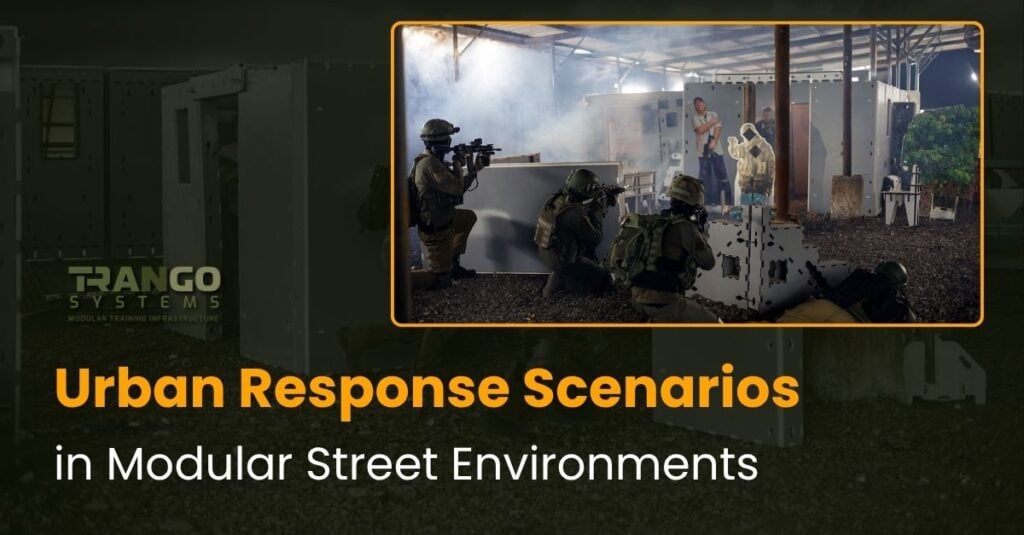
SWAT teams also use modular training facilities similar to the military’s shoot houses. Some police training centers have built mock subway cars or narrow corridors to simulate underground conditions. For instance, Trango Systems (a tactical training equipment provider) notes that modular shoot house structures can be configured with “tunnels below” to create 360-degree threat environments. This means an officer training in a shoot house might have to deal with a role-player popping up from a manhole or crawlspace, teaching them to cover vertical angles. Training like this reinforces that threats can come from any direction – “a window above, a tunnel below, or from behind a door” as one analysis put it.
Moreover, police benefit from the knowledge military experts have developed. Some federal law enforcement and homeland security units train for tunnel scenarios, especially for counter-terrorism (e.g., scenarios involving hostage rescue in an underground bunker). The U.S. Border Patrol even has specialized “tunnel teams” that get called in when cross-border drug smuggling tunnels are discovered, and they train to safely clear and map those tight spaces. Large-city SWAT teams increasingly recognize that while an underground encounter is rare, it can be extremely high-consequence – so it can’t be ignored in training curricula.
In summary, SWAT tactical training is evolving to include the subterranean dimension of the urban jungle. From practicing in parking garages and subways to using modular tunnel inserts in shoot houses, law enforcement is striving to be just as prepared below ground as above. This ensures that whether suspects hide in a drain culvert or terrorists strike in a metro station, responders can act with confidence and skill.
Advanced Technologies and Simulation for Underground Warfare Training
Modern underground warfare training is not just about brute-force tactics; it increasingly leverages advanced technology and simulation to give fighters an edge. These tools serve two purposes: enhancing realism in training scenarios and equipping soldiers with new capabilities to use in actual tunnel operations. Here are some of the cutting-edge approaches being integrated into training programs:
Robotics and Drones:
Small robots and unmanned aerial vehicles (UAVs) are game-changers for tunnel reconnaissance. Military units now train with throwable robots or small quadcopter drones that can scout ahead in a tunnel, relaying video to the team. In a recent U.S.–South Korean joint exercise, troops honed underground combat skills using drones and specialized robots to augment their searches. South Korean forces deployed multilegged robots to find entrances and exits of mock enemy bunkers before soldiers went in. They also used micro-UAVs “about the size of a human hand” to sniff out enemy positions and detect improvised explosive devices (IEDs) in tunnels. By training with these devices, soldiers learn how to integrate robotics into their tactics – for example, sending a robot around a corner to check for traps, or flying a tiny drone down a tunnel branch the team can’t see. This keeps human fighters out of the most dangerous blind spots. It also introduces new skills to master (controlling robots in tight spaces, interpreting drone sensor data under stress). Such training pays off in real operations; if an actual threat emerges underground, units are practiced in deploying their “robotic battle buddies” to map the unknown.
Simulation and Virtual Reality (VR):
Virtual simulations provide a safe way to experience underground scenarios that are hard to recreate physically. High-end simulators can mimic the visuals and some sensory effects of tunnel combat. For example, the U.S. Army uses virtual training software to rehearse missions in complex cave networks or subway systems when live training isn’t feasible. VR headsets can put soldiers into a 3D tunnel environment where they must navigate and make decisions. However, experts caution that simulators are a supplement, not a replacement for real tunnels. The sensory impacts – the heat, smells, and claustrophobia – are hard to reproduce digitally. “You really need to feel it in your heart, feel a low level of oxygen, feel how your body is reacting,” Richemond-Barak notes, underscoring the importance of live tunnel drills alongside VR. Moving forward, a combination of both is ideal: troops might conduct a virtual run-through of a known bunker layout to plan tactics, then later do a live exercise in a physical mock-up for the full experience.
Enhanced Communications:
Because standard radios fail underground, technology is being developed and fielded to keep teams connected. Training now includes use of signal repeaters, hard-wired field telephones, or even acoustic communications (tap codes) as backup. Some units practice laying wired comms lines behind them as they advance in a tunnel, so they maintain a link to the command post. Emerging solutions like through-the-earth communication devices (which send low-frequency signals through rock) are also tested. In training exercises, soldiers see how quickly they lose GPS and then must rely on inertial navigation or manual mapping. This encourages proficiency in old-school techniques like chalk-marking tunnel walls or using compass bearings. The Army is actively soliciting industry for portable tunnel mapping tech – such as a drone that can autonomously map as it flies. While those are being perfected, current training emphasizes communication discipline: simple, clear verbal or hand signals suited for echoing corridors, and contingency plans for when teams get cut off.
Specialized Gear and Safety Equipment:
Along with tactics, troops train on using gear tailored for subterranean ops. This includes oxygen gear or respirators for air supply (in case of fumes or low oxygen), head-mounted flashlights and infrared lasers for aiming in the dark, thermal imaging devices to spot warm bodies in darkness, and compact weapons (like short-barrel rifles or pistols) that are easier to wield in tight quarters. Night vision goggles are standard, but in zero-light conditions some units train with thermal cameras mounted on rifles. Additionally, breaching teams carry tools like bolt cutters, hooligan bars, and small explosive charges to get through obstacles. All this equipment requires practice to use effectively. There is also a focus on safety protocols – ensuring every soldier has a lifeline rope in certain scenarios, knowing emergency extraction procedures if someone is injured in a tunnel, etc. Training exercises enforce these protocols so that real missions can be conducted as safely as possible in such hazardous settings.
Scenario Diversity:
Modern simulation environments can be reconfigured quickly to present a wide variety of scenarios. Today’s training doesn’t rely on one “set” tunnel. Instead, modular facilities (discussed in the next section) allow instructors to change the layout frequently. This means a unit can be confronted with a different floor plan or challenge every run – one day it’s a straight dug tunnel with a single branch, the next it’s a labyrinth with multiple entrances. Some scenarios might integrate both underground and above-ground elements (for instance, start in a building then transition into tunnels, or vice versa). By varying scenarios, training prevents anyone from simply memorizing a course. It builds truly adaptable skills. Likewise, law enforcement simulations might include role-players as panicked civilians in a subway or a scenario with limited time (e.g. a “ticking clock” of a bomb threat in a basement), forcing officers to balance speed and caution.
In all, technology and innovative simulation methods are making underground warfare training more effective than ever. Soldiers and SWAT officers now head into mock tunnels armed not just with brute courage, but also with cameras that crawl for them, data on their wrist displays, and experience from lifelike drills. This blend of tactical training and tech-savvy preparation greatly increases their odds of success when facing the real thing.
Modular Training Solutions for Underground Warfare
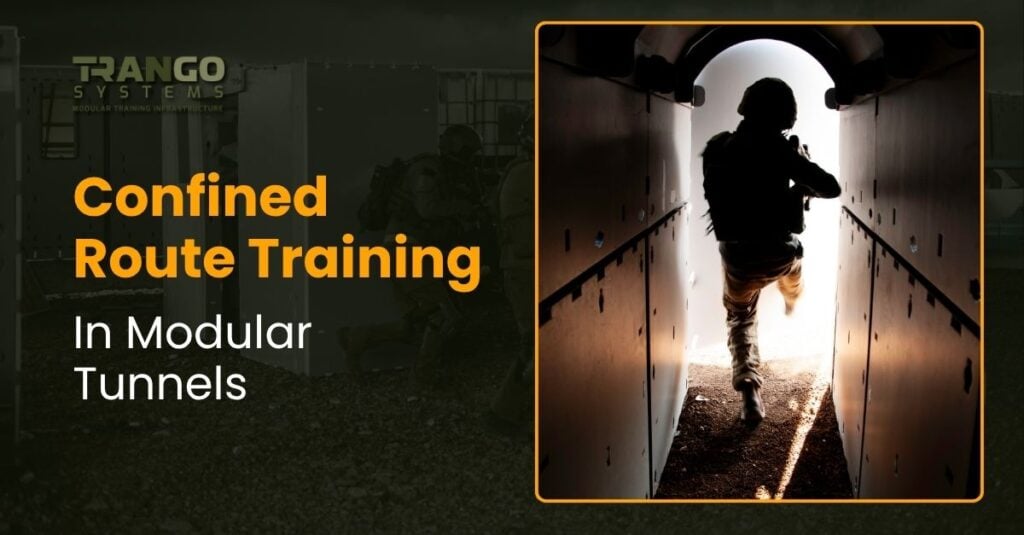
Realistic training is critical for mastering underground combat. Therefore, modular tunnel systems have become the top choice. These flexible setups allow military and law enforcement teams to rehearse fighting in tunnels without digging real ones. Lightweight and reconfigurable, modular kits can be assembled anywhere, indoors or outdoors, to simulate complex underground environments.
Trango Systems leads in this space with tunnel training structures that mimic real subterranean conditions. This includes tight corridors, low ceilings, and unexpected turns. Trainers can switch layouts quickly, enabling beginner drills or advanced scenarios using the same system. This dynamic design keeps training challenging and mission-relevant.
Key benefits of Trango’s modular tunnels:
- High realism, low risk: The setups feel authentic but use ricochet-free, durable materials for safe live-fire training.
- Flexible layouts: Tunnels connect seamlessly to above-ground structures for full-spectrum combat drills.
- Portable and scalable: Easily moved, set up, or adapted to match specific mission profiles.
- Long-lasting value: Built to withstand heavy use, weather-resistant, and low maintenance.
- Veteran-designed: Developed by IDF veterans who know what real tunnel combat demands.
In action, teams can cycle through multiple scenarios in a day. From basic navigation to complex multi-team clears. As a result, operators build the muscle memory and confidence they’ll need when the real fight happens underground—not afterward.
Tactical Training for tunnels and subterranean spaces
Underground warfare adds a new layer of complexity to modern combat and law enforcement operations. It demands short-range tactics in pitch-black darkness, steadfast nerves under harrowing conditions, and seamless teamwork when cut off from the outside world. By adopting specialized tactical training for tunnels and subterranean spaces, militaries and police forces are turning a vulnerability into a prepared strength. U.S. Army units now routinely drill to clear bunkers and sewers, and urban SWAT teams include basements and subway tubes in their scenario playbooks. They train with the latest tools – from drones that scout ahead to modular mock-ups that emulate any underground labyrinth.
Trained fighters who have honed these skills can enter an enemy tunnel system with much greater safety and effectiveness. They know how to maintain orientation, communicate with hand signals in silence, detect traps, and move methodically in the darkness. This kind of preparation saves lives. It also acts as a deterrent: adversaries can no longer assume that using tunnels will guarantee them free reign from pursuit.
Trango Systems’ Tactical Training Solutions
In the end, the labyrinth of underground warfare can only be conquered by knowledge, practice, and the right equipment. Trango Systems’ modular training solutions for underground warfare exemplify how innovation is meeting this challenge head-on. These systems provide hyper-realistic yet safe environments for forces to practice the art of fighting in tunnels. They bring together the benefits of real-world experience (designed by seasoned professionals) with the convenience of modern engineering (portable, reconfigurable structures). With such tools, an army unit or SWAT team can repeatedly rehearse missions beneath the surface until operating in tight, dark confines becomes second nature.
As underground threats continue to evolve, so too will the training methods to counter them. From the caves of Afghanistan to the dense sewer networks under megacities, those tasked with our security will be ready to follow danger wherever it goes – even into the depths of the earth. Through comprehensive underground warfare tactical training – backed by cutting-edge modular facilities and technology – today’s military and law enforcement professionals stand prepared to face the fight below the surface and emerge victorious.